
The 2026 Midterms: What They Are, How They Work, and What’s at Stake
A primer on midterm elections, the primary system, and the balance of power on the line November 3, 2026.

By Scott Burton Official (10 min read)

On November 3, 2026, American voters will elect all 435 members of the U.S. House of Representatives, 35 U.S. senators, and 36 state governors — without a presidential candidate on the ballot. These are the midterm elections, held at the midpoint of every presidential term since the Constitution took effect in 1789. Before November, however, a separate and equally consequential process begins: the primaries.
In Texas, North Carolina, and Arkansas, primary voting begins March 3, 2026. Those primaries will determine which candidates carry each party’s banner into the November general election. And that general election will determine which party controls the levers of power in Washington starting January 2027.
What follows is a factual account of what midterm elections are, how the primary system works, and what concretely hangs in the balance when American voters go to the polls this fall.
What Are Midterm Elections?
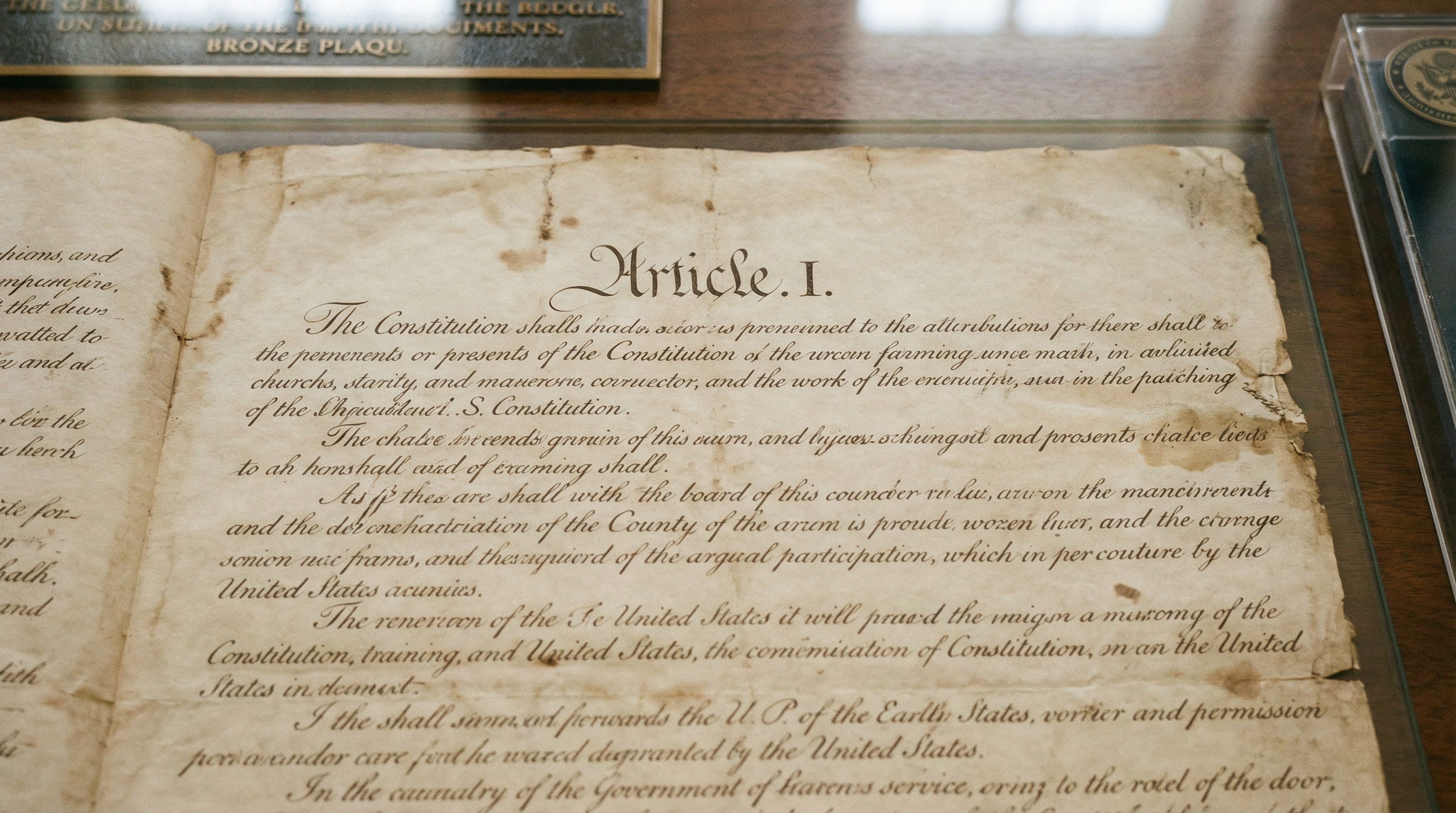
The United States Constitution structures federal elections on two separate cycles. Under Article I, members of the House of Representatives serve two-year terms, meaning all 435 seats are on the ballot in every even-numbered year — including years when no presidential election takes place. Senators serve six-year terms, and Article I divides the Senate into three classes whose elections are staggered, so that approximately one-third of the chamber faces voters every two years.
The elections that fall at the midpoint of a president’s four-year term — held in November of years divisible by two but not by four — are known as midterm elections. They have been held continuously since 1789. In 2026, that means voters will choose all 435 House members, 35 senators, and 36 governors on a single Election Day, November 3, with no presidential race on the same ballot.
Midterm elections consistently draw lower voter participation than presidential elections. In presidential years over the past six decades, national voter turnout has averaged between 50 and 60 percent of eligible voters. In midterm years, that figure drops to approximately 40 percent — a gap of roughly 15 to 20 percentage points. In 2014, turnout fell to 36.4 percent of eligible voters, the lowest figure recorded since 1942. That structural difference in participation shapes the outcome: in lower-turnout elections, the composition of who shows up matters more than in high-turnout presidential years.
The Congress elected in a midterm serves alongside the sitting president for the final two years of his term. When the majority in either chamber changes parties, it fundamentally alters what the president can and cannot accomplish legislatively. Midterm governors, meanwhile, control state budgets, state policy, and in many states the redistricting process that redraws congressional maps after each decennial census.
The Historical Pattern: What Eighty Years of Results Show
The most consistent pattern in modern American electoral history is this: the party that holds the White House loses ground in midterm elections. Since the end of World War II in 1945, there have been 20 midterm elections. In 18 of them — 90 percent — the president’s party lost seats in the U.S. House of Representatives. The average loss across those 20 cycles is 26 House seats and four Senate seats.
Political scientists describe the dynamic as a thermostatic effect: voters who supported the president two years earlier become harder to mobilize, while voters who opposed him tend to be more energized to turn out. The result, borne out in the data across eight decades, is a consistent structural disadvantage for the party in power at midterm time.
Three recent midterm cycles illustrate the pattern. In 2014, during President Barack Obama‘s second term, Republicans gained nine Senate seats — the largest single-cycle gain in the Senate since 1980 — bringing their total to 54 seats to Democrats‘ 46. Republicans also gained 13 House seats, pushing their total to 247 — the largest House majority for either party since 1928. Combined with their gains in 2010, Democrats lost 77 House seats over Obama‘s two midterm cycles.
In 2018, during President Donald Trump‘s first term, Democrats gained 41 House seats — the largest single-cycle gain for either party since 1974 — flipping the House to Democratic control with a final count of 235 to 199. In the Senate, however, Republicans gained two seats, extending their majority to 53 to 47, in part because Democrats were defending a disproportionate number of seats in states Trump had carried in 2016.
In 2022, during President Joe Biden‘s first term, Republicans gained nine House seats, flipping the House to a final count of 222 to 213. Democrats, however, gained one Senate seat, ending with a 51 to 49 majority. Both 2018 and 2022 produced split results — one chamber moving one direction, the other moving the opposite — a pattern made possible by the Senate‘s staggered elections and uneven state-by-state terrain.
The pattern has held with near-uniformity since World War II, with only two exceptions. In 1998, President Bill Clinton‘s Democrats gained five House seats during Republican-led impeachment proceedings against Clinton — a result widely attributed to public opposition to the impeachment effort and a strong national economy. In 2002, President George W. Bush‘s Republicans gained eight House seats in the first election following the September 11, 2001 attacks, when Bush‘s approval rating reached 90 percent.
The 2026 midterms carry a distinction that sets them apart from every election held in the past 132 years. They are the first midterms held during a non-consecutive second presidential term since 1894, when President Grover Cleveland — who lost his reelection bid in 1888 and won the presidency back in 1892 — faced the voters at the midpoint of that second, non-consecutive term. The pattern held: Cleveland‘s Democrats lost more than 100 House seats in 1894, one of the most severe midterm losses in American history.
How Primaries Work — and Why They Matter
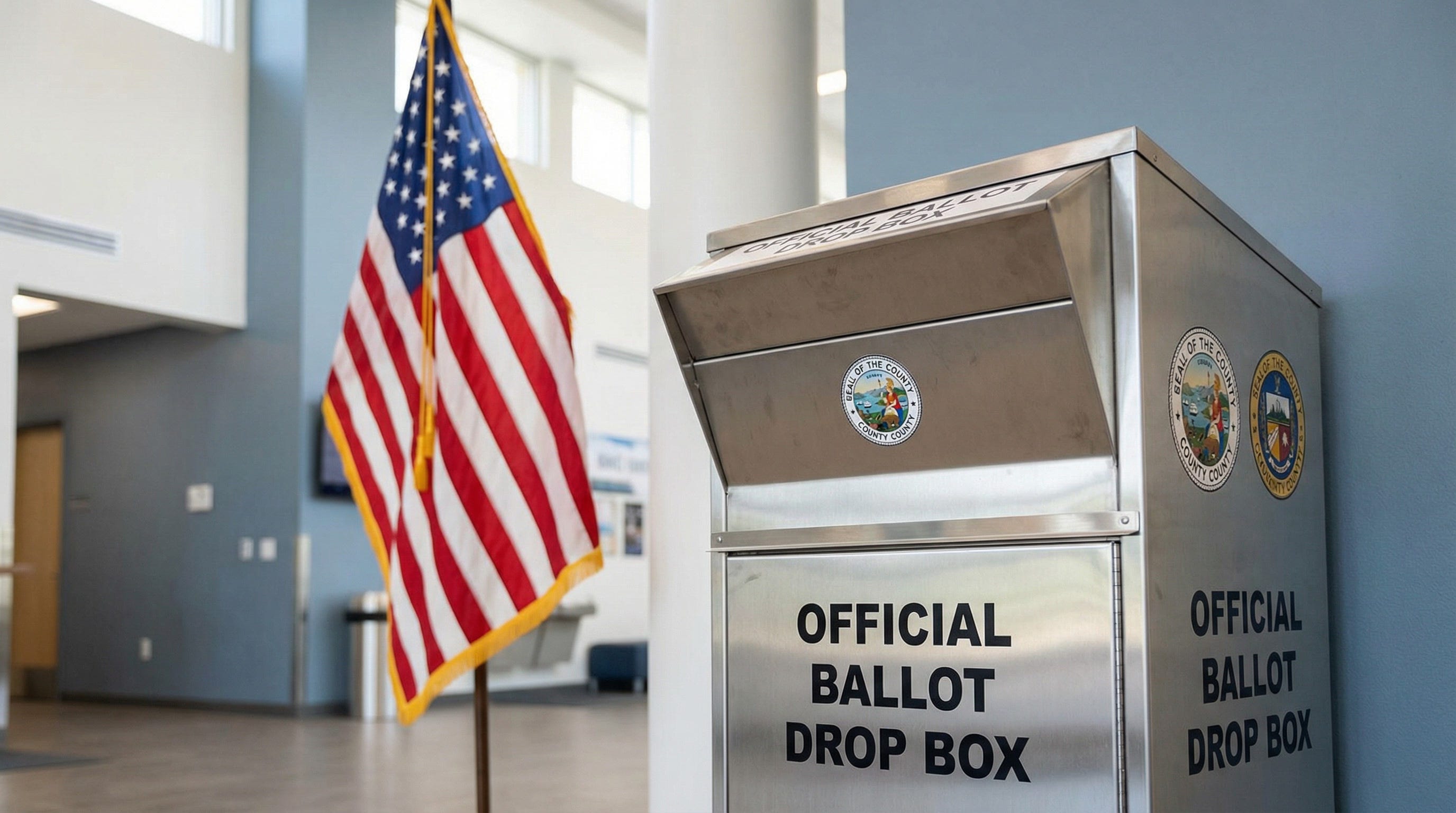
Before any candidate appears on a November general election ballot, each major party must first select its nominee through a primary election. Primaries are intraparty contests in which registered voters choose which candidate will represent their party in the fall. The winner of each party’s primary advances to face the other party’s nominee — and any independent or third-party candidates — in the general election.
States structure their primaries in one of two broad formats. In closed primaries, only voters registered with a given party may participate in that party’s contest. In open primaries, any registered voter may participate in either party’s primary, regardless of their own party registration. Some states use hybrid systems with varying rules for unaffiliated voters.
Several states, including Texas, Arkansas, and Mississippi, require a candidate to win an outright majority — more than 50 percent of the vote — to claim the nomination. If no candidate clears that threshold in the primary, the top two vote-getters advance to a runoff election held several weeks later. That runoff, not the primary itself, determines the nominee. The requirement for a majority rather than a plurality can significantly extend the primary calendar and increase campaign costs.
The 2026 primary calendar begins on March 3, when Texas, North Carolina, and Arkansas hold their primaries. Mississippi follows on March 10, and Illinois on March 17. Dozens of additional states hold primaries through the spring and into August, with the final contests concluding approximately two months before Election Day.
The Texas Senate primary offers a concrete illustration of the dynamics that primaries introduce. Republican incumbent Sen. John Cornyn faces a primary challenge from state Attorney General Ken Paxton. In 2023, the Texas House of Representatives voted to impeach Paxton on charges that included bribery and abuse of office. The Texas Senate subsequently acquitted Paxton on all charges. The episode remains a central element of the primary contest. The outcome of the Cornyn-Paxton primary will determine which Republican carries the party into the general election — and that choice carries implications for the party’s competitiveness in November. What energizes a party’s primary electorate and what is required to win a general election are not always identical, a tension that plays out in primaries across the country in every election cycle.
What Senate Control Actually Means
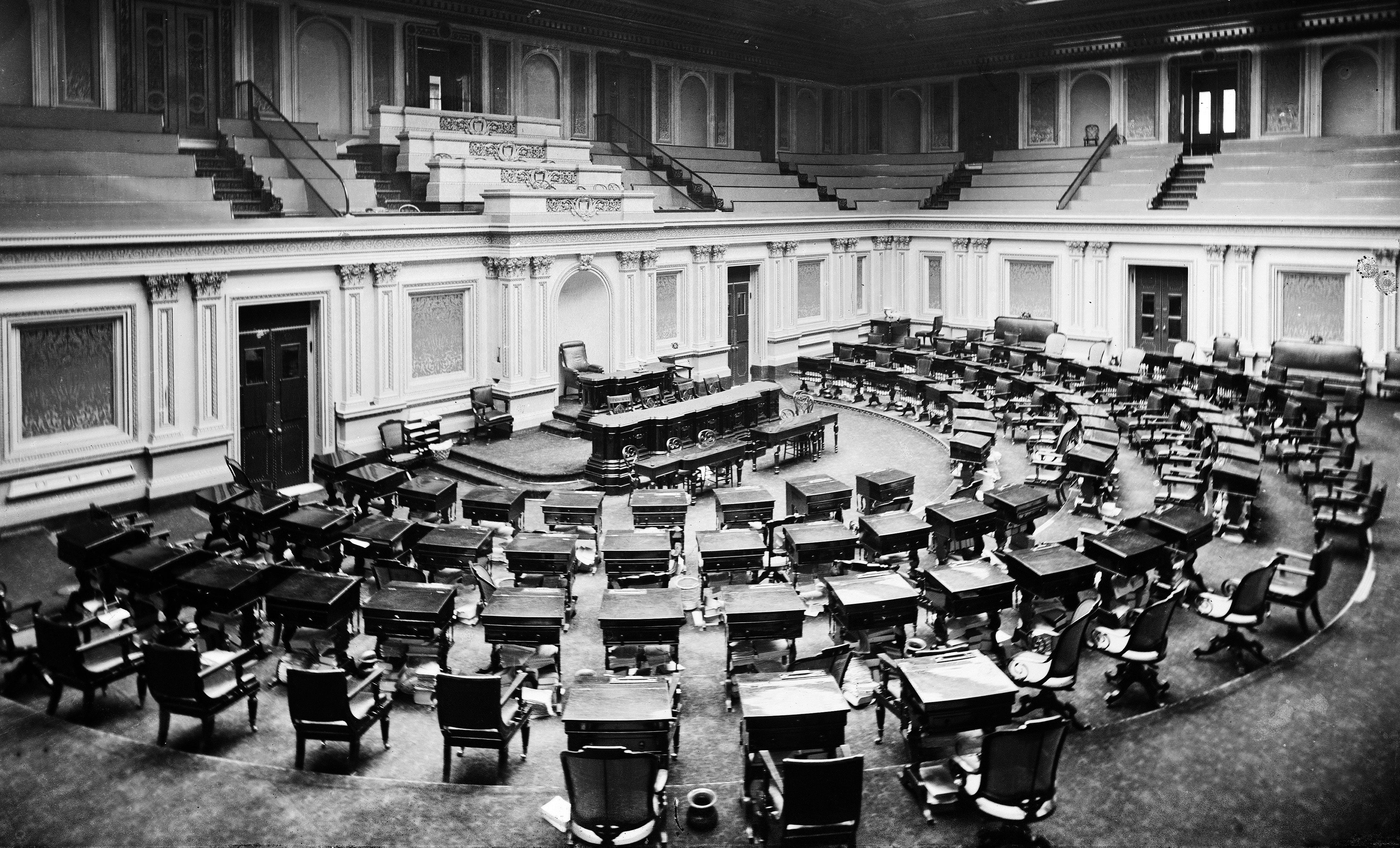
The U.S. Senate currently consists of 53 Republicans and 47 Democrats. That 47 includes two independents — Sen. Bernie Sanders of Vermont and Sen. Angus King of Maine — who caucus with the Democratic Party for organizational purposes. Democrats need a net gain of four seats to reach a majority. Republicans can lose no more than two seats and retain control.
Whichever party holds the majority controls all committee chairmanships. Committee chairs determine which legislation receives hearings, which bills are advanced to the floor for a vote, and the pace and scope of congressional oversight. Legislation that never receives a committee hearing never reaches the full Senate floor. That gating function gives the majority party substantial influence over the legislative agenda independent of the outcome of any particular floor vote.
Most legislation requires 60 votes to advance past a filibuster and reach a final vote on the Senate floor. A party holding 53 or even 57 seats does not automatically have the votes to pass major legislation. The 60-vote threshold means that significant bills typically require at least some degree of bipartisan support, or the use of procedural mechanisms that bypass the filibuster entirely.
The primary such mechanism is budget reconciliation, a procedural process that allows certain fiscal legislation to pass with a simple majority of 51 votes rather than the 60 required to break a filibuster. Reconciliation has been used to pass major legislation across administrations of both parties, including the 2017 Republican tax overhaul and the 2022 Democratic climate and health care package known as the Inflation Reduction Act. Its use is governed by specific rules limiting the scope of what can be included, but it remains the primary vehicle for passing major fiscal legislation without bipartisan support.
The Senate also holds exclusive authority over the confirmation of federal judges, including Supreme Court justices, as well as cabinet officers and other senior executive branch officials. Since 2017, judicial confirmations require only a simple majority of 51 votes, meaning the party in the majority controls the pace and outcome of judicial appointments for the entirety of its majority.

The House, the Governors, and the Full Ballot
While the Senate map has drawn the most attention heading into 2026, the U.S. House presents its own set of consequential contests. All 435 seats are on the ballot. Republicans currently hold 218 seats to Democrats‘ 214, with several vacancies. Democrats need a net gain of three seats to reach a majority. Republicans can afford to lose no more than two and retain control.
Nonpartisan election trackers have identified 42 competitive battleground districts heading into 2026 — 22 held by Democrats and 20 held by Republicans. An additional layer of uncertainty comes from redistricting: four states — California, Missouri, North Carolina, and Texas — will use newly redrawn congressional maps for the first time in 2026, following mid-decade redistricting efforts that altered district boundaries after the 2024 elections.
The 2026 ballot also includes 36 gubernatorial elections. Republicans currently hold 26 governorships to Democrats‘ 24. Of the 36 seats on the ballot, 15 are open because incumbents are constitutionally prohibited from seeking additional terms — producing a higher-than-average number of races without an incumbent on the ballot. The most competitive gubernatorial contests are concentrated in states that were closely contested in the 2024 presidential election: Georgia, where Republican Gov. Brian Kemp is term-limited; Michigan, where Democratic Gov. Gretchen Whitmer is term-limited; Arizona, where Democratic Gov. Katie Hobbs is seeking reelection; and Wisconsin, where Democratic Gov. Tony Evers is seeking reelection.
Governors control state budgets and policy, and in many states hold direct authority over the administration of elections. They also play a significant role in the redistricting process that will follow the 2030 census, when congressional maps will be redrawn in every state. Which party controls governorships after 2026 will shape the congressional playing field for the decade that follows.
What Comes Next
The 2026 midterm elections will be decided on November 3. Before that day, voters in more than 40 states will participate in primary elections that determine the nominees each party sends into the general election. The first of those primaries — in Texas, North Carolina, and Arkansas — take place on March 3.
The structural facts are straightforward. The Senate majority is separated by four seats. The House majority is separated by three. Thirty-six governorships are in play. The historical record shows the president’s party losing ground in 18 of 20 midterm elections since World War II, with only two documented exceptions in eight decades.
What happens between March 3 and November 3 — who wins primaries, who raises money, who turns out voters across the 50 states — will determine the composition of the 120th United States Congress and the governors of 36 states when they are sworn into office in January 2027.