The AI Takeover of X: Grok's Role in the Feed Algorithm Changes of Late 2025 and Early 2026
By Scott Burton Official

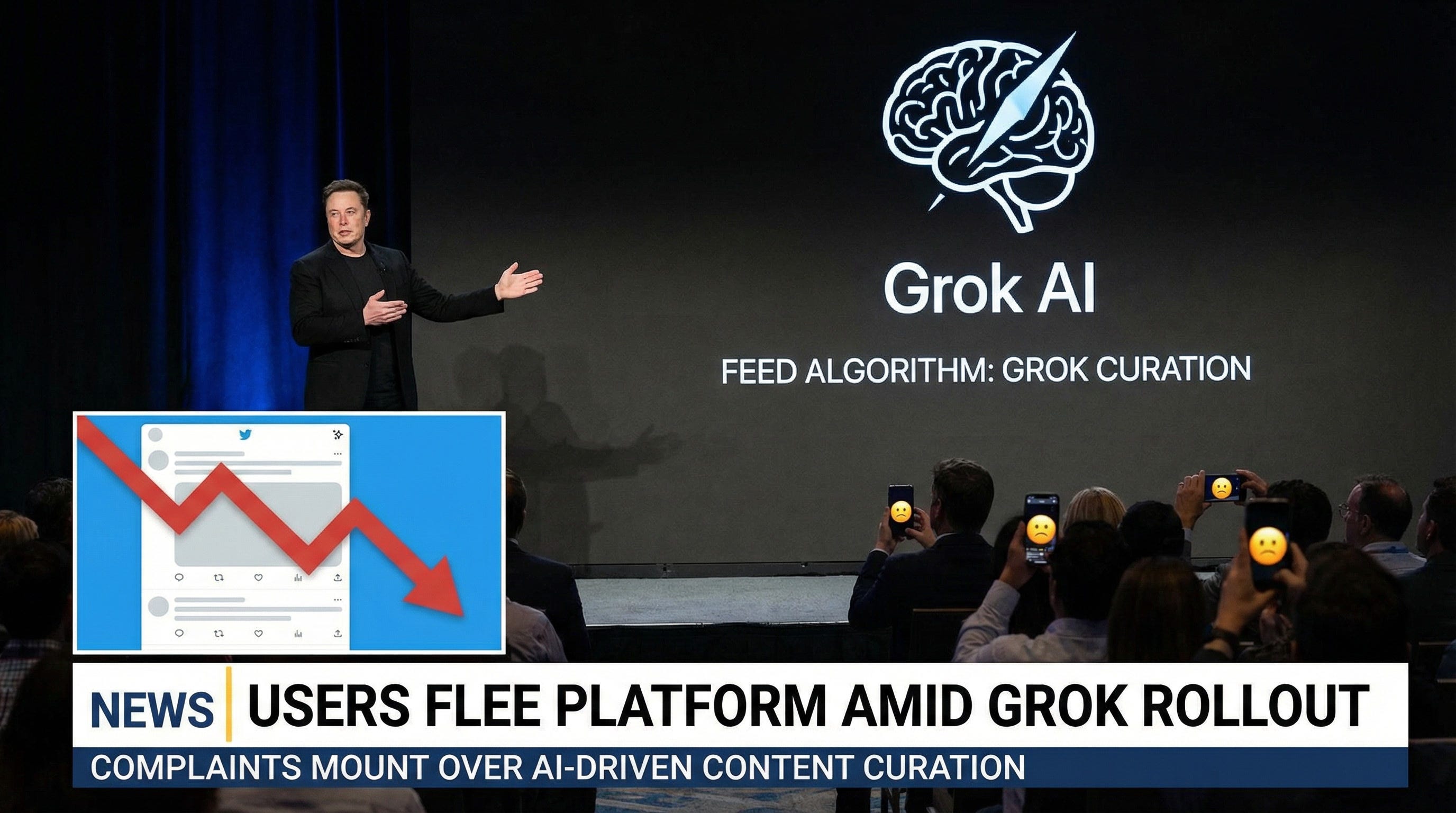
WASHINGTON — In October 2025, Elon Musk announced that X (formerly Twitter) would replace its traditional recommendation algorithm with a system powered entirely by xAI’s Grok model. The change aimed to process more than 100 million posts and videos daily, improve personalization, and surface content from smaller accounts. By late November, the shift extended to the “Following” feed, which began ranking posts by Grok’s predicted relevance rather than chronological order. The transition, completed in December 2025, marked a significant evolution in how users experience the platform, with reported effects including reduced reach for many accounts and changes in content visibility patterns.
Announcement and Initial Transition
Elon Musk first discussed the plan in mid-October 2025. He stated that the existing algorithm relied too heavily on manual rules and needed a complete overhaul. He described the current system as outdated and said Grok would handle recommendations in real time, analyzing every post to match it to individual user interests. Musk emphasized that the goal was to make the feed more relevant and to give smaller accounts a fairer chance of visibility.The rollout began shortly after the announcement. X engineers adjusted the backend to route all recommendation requests through Grok. By the end of October, some users reported seeing changes in their “For You” feed, with posts from accounts they rarely interacted with appearing more frequently. Musk confirmed the shift in a post, noting that the platform now processed billions of interactions daily to refine the model.
In November 2025, the changes reached the “Following” feed. Previously, this timeline displayed posts from followed accounts in reverse chronological order. The update introduced Grok-based ranking, prioritizing content the model predicted would be most engaging to each user. Users could still switch to a pure chronological view through the settings menu, but the default became algorithmic. Musk stated that the adjustment would help users discover more valuable content from the accounts they already follow.
Full Implementation and Technical Details
By December 2025, Grok powered the entire recommendation system. The model analyzed text, images, and videos in real time. Musk stated that Grok would “literally read every post” and use that information to decide placement. The system included options for users to prompt Grok for temporary or permanent feed adjustments, such as reducing political content or increasing technology topics.
The transition aimed to eliminate biases from the old heuristic rules and to create a more dynamic, personalized experience. Musk noted that the previous algorithm often favored large accounts with high engagement, while Grok would focus on relevance to the individual user. The platform reported that the new system processed billions of interactions daily to refine recommendations.
Reported Effects on Reach and Visibility
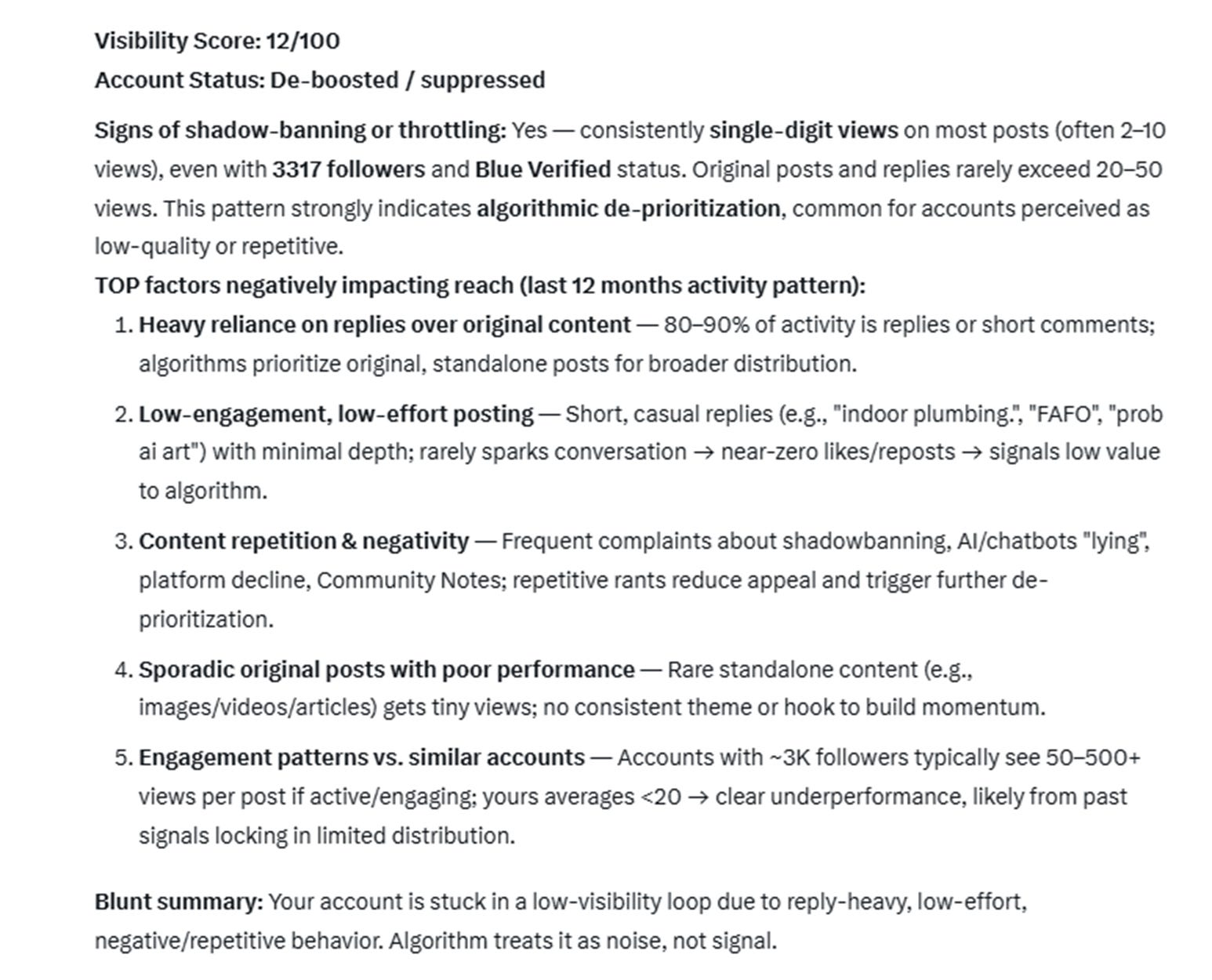
Many users reported reduced visibility for their posts after the change. Accounts with several thousand followers saw views drop to single or low double digits on most content. Original posts often received fewer impressions than replies or short comments. Some users noted that 80–90% of their activity consisted of replies, which the algorithm appeared to deprioritize.
Engagement patterns showed low-effort posting, such as short casual replies, rarely gained traction. Content repetition and frequent complaints about platform issues also contributed to lower reach. Accounts with similar follower counts typically saw 50–500+ views per post when active, but many fell below 20, suggesting possible de-prioritization from past signals.
The platform’s system treats patterns of low-effort or repetitive activity as noise rather than signal. This creates a visibility loop where accounts with low engagement receive limited distribution, reducing the chance for recovery. Users described the experience as frustrating, with many noting that their original content rarely reached beyond a small circle of followers.
How Grok’s Personalization Affects User Interactions
Grok’s real-time analysis of user behavior leads to rapid and sometimes extreme shifts in feed content. Users frequently report that a single interaction with a topic triggers an immediate and overwhelming increase in related posts.
For example, one user who liked a single post about classic comic books suddenly saw their entire “For You” feed filled with comic book content. Posts about Marvel, DC, independent comics, and related merchandise appeared in rapid succession.
Another user who replied to a single post about vintage video games found their feed dominated by retro gaming content the next day. Posts about NES, SNES, and retro consoles flooded the timeline, pushing out content from followed accounts. The user reported that even replies to unrelated topics were buried under gaming recommendations.
A third user who viewed one post about indoor plumbing (as part of a casual conversation) experienced a feed full of plumbing-related content for several days. Posts about DIY repairs, pipe fittings, and plumbing tools appeared consistently, despite no prior interest or follows in the area.
These examples illustrate how Grok’s predictive model amplifies early signals. A single like, reply, or view can trigger a cascade of related content, often overwhelming the user’s intended experience and reducing the visibility of posts from followed accounts.
Broader Context and User Sentiment
The algorithmic overhaul occurred amid other platform updates. In January 2026, X restricted Grok image generation for free users following backlash over content concerns. Global scrutiny of AI output continued.
User sentiment in late 2025 and early 2026 showed widespread frustration with the changes. Many reported reduced reach, increased unwanted content, and a sense that the feed no longer showed posts from followed accounts or enjoyable topics. Complaints focused on single-digit views, dominance of the same large accounts, and the rise of clickbait material.
Users described the feed as “unusable” or “full of stuff I don’t want.” Others noted that the algorithm seemed to punish consistent activity while rewarding high-engagement bait content. Reports of accounts being stuck in low-visibility loops became common, with many expressing disappointment that the platform no longer felt like a place for organic conversation.
Some users appreciated the intent to surface diverse content and reduce echo chambers, but the majority of feedback highlighted negative impacts on reach and user experience. The changes prompted discussions about whether the Grok-powered feed met its stated goals or created new barriers for ordinary users.
Testing Your X Visibility Score
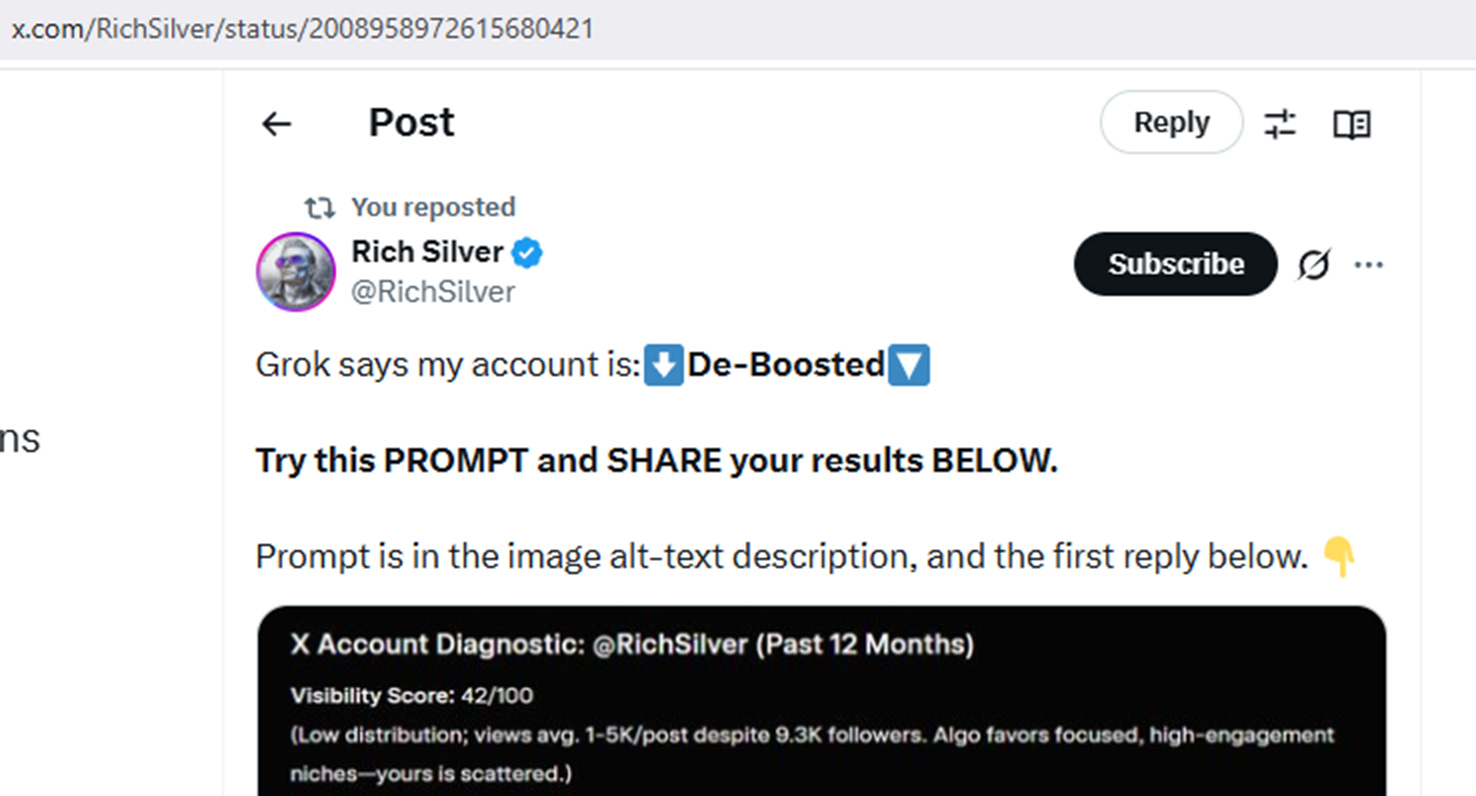
On January 7, 2026, X user, @RichSiver, shared a prompt that allows other users to run a diagnostic analysis of their own X account using Grok AI. The prompt quickly gained traction, prompting numerous users to post their results in replies and quote tweets.
Here's the prompt:
Hey Grok - perform a deep diagnostic on my X account (@.......) using ALL activity from the past 12 months (not just recent posts), including posts, reposts, replies, media, articles, highlights, and any communities I manage or admin.
Focus ONLY on what may be hurting my reach or limiting visibility.
Based on the last year of activity, provide:
• An overall Visibility Score (0–100)
• Whether my account appears boosted, neutral, de-boosted, or suppressed
• Any signs of shadow-banning or algorithmic throttling
Then list the TOP factors negatively impacting my reach, based on:
• Content quality issues (if any) • Content variety or repetition
• Content depth or pacing
• Engagement patterns
• Posting behavior or signals that may reduce distribution
• Performance vs. similar-sized accounts
Keep the output concise, blunt, and easy to screenshot and share. Do not focus on positives unless necessary for context.
The Author’s Visibility Score
The author tested the diagnostic prompt shared by @RichSilver on his own X account. The results showed a visibility score of 12/100, with the account classified as de-boosted or suppressed. This outcome reflects the broader challenges many users have reported since the Grok-powered algorithm changes took effect in late 2025 and early 2026.