
The December Promises: A First-Year Cabinet Scorecard
What five Trump cabinet secretaries said on December 2, 2025 — and what the verified record shows since

By Scott Burton Official (8 min read)
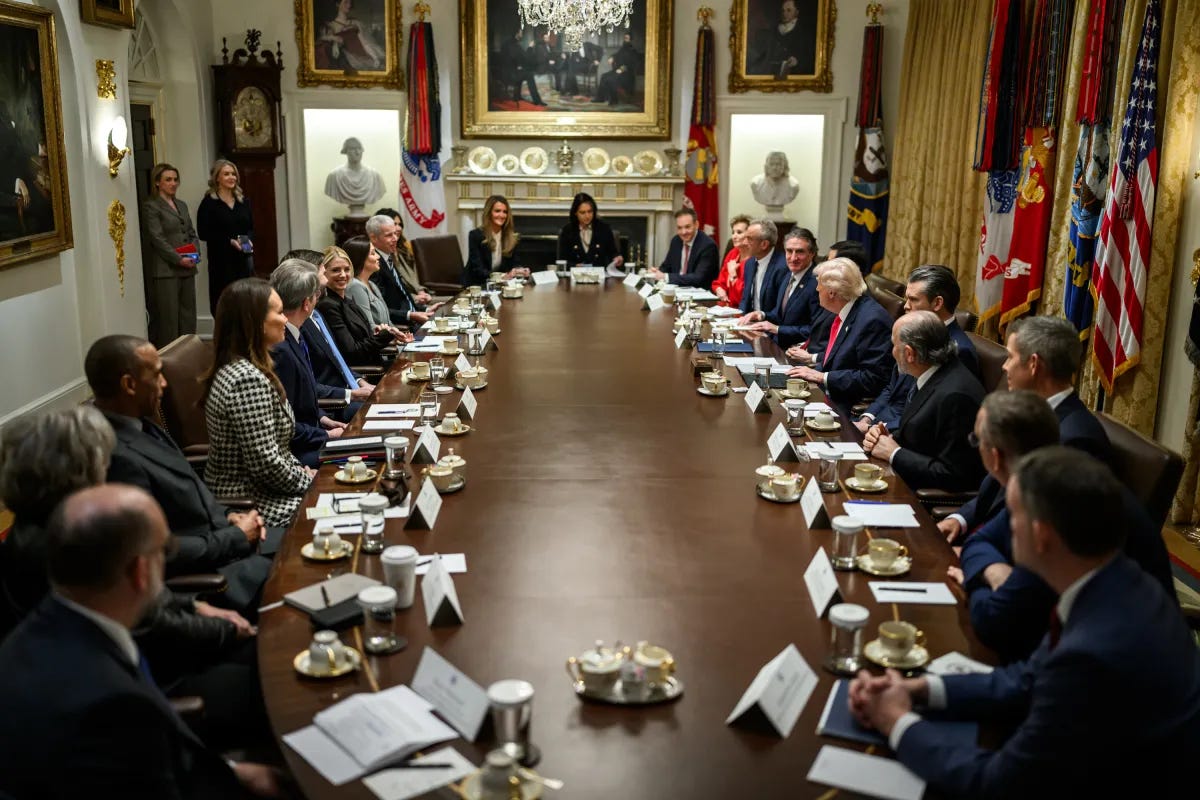
On December 2, 2025, President Donald Trump convened his ninth and final cabinet meeting of the year in the White House Cabinet Room. Twenty cabinet secretaries and Vice President JD Vance delivered updates on their departments’ achievements and priorities. The session ran two hours and 18 minutes and was open to the press. Every statement made that day is part of the official record.
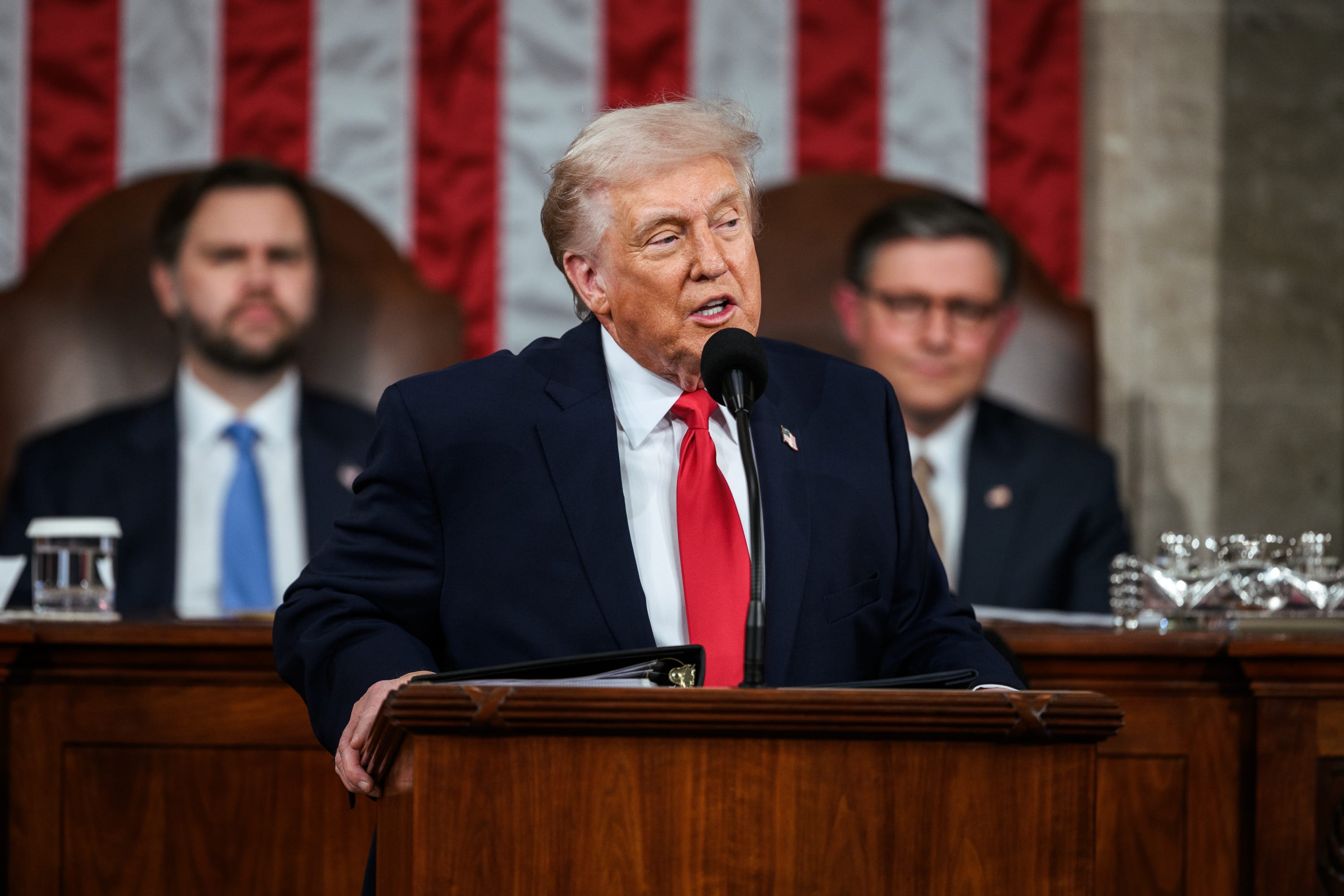
Eight weeks later, on February 24, 2026, Trump delivered his State of the Union address to a joint session of Congress, updating many of those same themes before the largest national audience of his second term.
This article reports what five secretaries said at the December 2 cabinet meeting, what Trump said about those same topics at the February 24 SOTU, and what the verified public record shows has happened since. The facts are presented here without analysis or editorial judgment. Readers can assess the record for themselves.
Treasury: The One Big Beautiful Bill
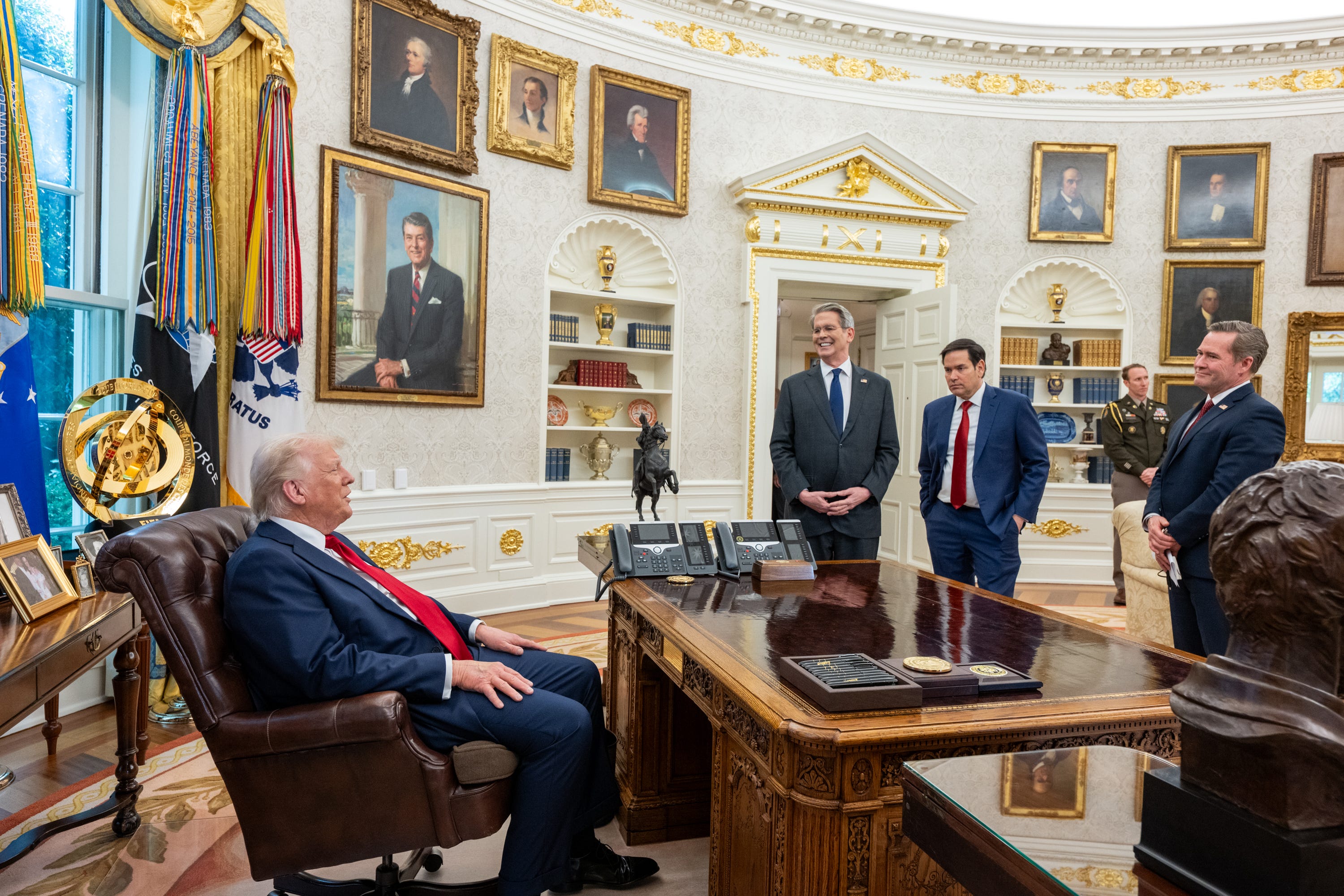
At the December 2 meeting, Treasury Secretary Scott Bessent described a package of pending tax legislation he said would transform the U.S. economy. The bill would deliver 100% business expensing, eliminate taxes on tips and overtime pay, remove taxes on Social Security benefits for seniors, and allow retroactive car loan deductions. Bessent described the bond market as having its best year since 2020 and said the legislation, if passed, would set up a strong 2026 economy.
At the February 24 SOTU, Trump confirmed the bill had passed, telling Congress it delivered no tax on tips, no tax on overtime, no tax on Social Security for seniors, and made interest on auto loans tax deductible for American-made vehicles. Trump credited Republican majorities for passing the bill and noted every House and Senate Democrat voted against it.
What the record shows: The One Big Beautiful Bill Act, formally designated Public Law 119-21, was signed into law by President Trump on July 4, 2025. The Senate passed the bill 51-50 on July 1, with Vice President Vance casting the tiebreaking vote. The House passed the final version 218-214 on July 3. Key confirmed provisions include a deduction of up to $25,000 for qualified tips, up to $12,500 for overtime pay, auto loan interest deductible on American-made vehicle purchases, and the creation of Trump Accounts — tax-deferred investment accounts for children. The bill also permanently extended individual tax rates originally established under the 2017 Tax Cuts and Jobs Act, which were set to expire at the end of 2025. The Congressional Budget Office estimates the bill will add approximately $3 trillion to the national debt over ten years.
Energy: Gasoline Prices
At the December 2 meeting, Energy Secretary Chris Wright reported that gasoline prices had fallen below $3 per gallon nationally, with prices as low as $1.99 per gallon in parts of the heartland. Wright attributed the declines to administration energy policies, including reversing power plant closures and expanding domestic production capacity.
At the February 24 SOTU, Trump updated the figures, stating gasoline is now below $2.30 per gallon in most states, with $1.99 per gallon in some locations and $1.85 per gallon observed during a recent visit to Iowa — which Trump called the lowest price in four years.
What the record shows: According to AAA, the national average for a gallon of regular gasoline as of February 19, 2026 was $2.92, down from $3.14 at the same point one year earlier. Gas prices declined year-over-year in 48 of 50 states. The ten least expensive markets as of mid-February were Oklahoma ($2.28), Arkansas ($2.45), Kansas ($2.46), Mississippi ($2.49), Iowa ($2.50), Louisiana ($2.50), Missouri ($2.51), North Dakota ($2.53), Wisconsin ($2.53), and Texas ($2.55). The ten most expensive markets were led by California ($4.59) and Hawaii ($4.40). The U.S. Energy Information Administration forecasts the national average for all of 2026 at $2.91 per gallon. The national average of $2.92 as of February 19 remains above the $2.30 figure Trump cited at the SOTU.
Homeland Security: Immigration Enforcement

At the December 2 meeting, Homeland Security Secretary Kristi Noem reported the removal of 2 million illegal immigrants since January 20, 2025, with the administration prioritizing the removal of terrorists and criminals. Noem also announced the hiring of the 10,000th ICE officer under the administration.
At the February 24 SOTU, Trump said the border is now the strongest and most secure in American history, that zero illegal aliens have been admitted to the United States in the past nine months, and that deadly fentanyl crossing the border is down by a record 56% in one year.
What the record shows: The Department of Homeland Security, in a statement dated February 24, 2026, reported that nearly 3 million individuals have left the United States since January 20, 2025, including an estimated 2.2 million self-deportations and more than 713,000 deportations. The DHS figures combine voluntary departures tracked through the CBP Home app with formal ICE removals.
Independent researchers have disputed the self-deportation methodology. The Brookings Institution estimates actual ICE removals for 2025 at 310,000 to 315,000. The Deportation Data Project puts the figure at approximately 350,000 deportations through early February 2026. Both organizations have published detailed explanations of their methodologies. DHS disputes the lower figures.
The core disagreement centers on how self-deportations are counted. DHS uses Current Population Survey data and CBP app registrations to estimate voluntary departures. Brookings and other independent researchers have said those data sources cannot reliably measure the number of people who actually left the country.
Both the government figures and the independent estimates are reported here. Readers can review the sourcing — dhs.gov, the Brookings Institution, and the Deportation Data Project — directly.
Defense: Drug Boat Strikes and Narco Interdiction

At the December 2 meeting, Defense Secretary Pete Hegseth reported a 91% reduction in sea-based drug entries into the United States, attributing it to ongoing lethal military strikes against vessels the administration designated as narco-terrorist targets. Hegseth described the designation of Latin American cartels as foreign terrorist organizations, enabling military authority to treat their boats as legitimate strike targets. Trump interjected at the meeting, stating each boat taken out saves an estimated 25,000 American lives.
At the February 24 SOTU, Trump cited fentanyl crossing the border as down 56% and described the administration as engaged in armed conflict with drug cartels in Latin America.
What the record shows: Since September 2025, U.S. Southern Command has conducted at least 38 to 40 strikes on vessels in the Caribbean Sea and Eastern Pacific Ocean under what has been identified as Operation Southern Spear. As of mid-February 2026, at least 135 people have been killed in the strikes, according to reporting by Stars and Stripes, NBC News, CNN, and USNI News. No U.S. military personnel have been reported killed or injured in the operations.
The operation produced a major geopolitical development on January 3, 2026, when U.S. military forces conducted an operation in Caracas, Venezuela, resulting in the capture of Venezuelan President Nicolás Maduro and his wife, Cilia Flores. Both were extradited to New York to face federal charges including narcoterrorism conspiracy and cocaine importation conspiracy. Maduro has pleaded not guilty to all charges. Acting Venezuelan President Delcy Rodríguez has maintained that Maduro remains the country’s legitimate leader.
Strike frequency slowed following Operation Absolute Resolve and Maduro’s capture. On February 5, 2026, Hegseth posted on social media that “some top cartel drug-traffickers” had “decided to cease all narcotics operations indefinitely” due to the strikes. Hegseth did not name the cartels and provided no supporting data. Strikes have continued, with three vessels struck on February 16 killing 11 people, and additional strikes in the weeks since.
The operations have drawn scrutiny from Congress and international bodies. The Senate and House Armed Services Committees have opened bipartisan investigations. The United Nations Human Rights Chief called for an investigation, citing what he described as “strong indications of extrajudicial killings.” Congressional lawmakers have not moved to halt the strikes. The original 91% sea drug reduction figure cited in December has not been updated with a new independently verified number.
Health and Human Services: Prior Authorization Reform

At the December 2 meeting, HHS Secretary Robert F. Kennedy Jr. stated the department had eliminated prior authorizations for 280 million Americans by January 2026 and had enabled health record sharing that increased patient access 100-fold.
What the record shows: In June 2025, HHS secured a voluntary, non-binding pledge from insurance industry representatives to reduce the volume of medical services subject to prior authorization by January 1, 2026. The pledge also called for real-time approvals for most requests by 2027 and required that medical professionals review all clinical denials. The commitment was announced jointly by Secretary Kennedy and CMS Administrator Dr. Mehmet Oz at an HHS event.
The pledge was a voluntary industry commitment, not a federal regulation, mandate, or enforceable legal requirement. No HHS announcement confirming the completed elimination of prior authorizations for 280 million Americans has been issued. At a Heritage Foundation event on February 9, 2026, Kennedy said the administration “will continue to reform prior authorization” — language indicating the work remains in progress.
Kennedy’s broader HHS agenda has included a significant restructuring of the department, reducing its workforce from approximately 82,000 to 62,000 employees. That reorganization was partially blocked by a federal court in Rhode Island, which ruled in New York v. Kennedy that 19 states and the District of Columbia were likely to succeed in their claim that the reduction-in-force was conducted unlawfully. The court order prevented further reorganization steps but did not reinstate terminated employees. Kennedy’s most-favored-nation drug pricing policy was enacted and is accessible to consumers at trumprx.gov.
What Comes Next
Issue 4 continues through March 2026 with updates across the three topic areas covered since December 2025. Article 2 will report on the domestic and economic claims Trump made at the February 24 State of the Union address, measuring them against current verified data. Article 3 will cover the new policy items that emerged during Trump’s first year but were not part of the December cabinet baseline — including the Supreme Court’s tariff ruling, Operation Midnight Hammer in Iran, and the Gaza hostage resolution.
Primary results coverage begins with Texas and North Carolina, voting March 4, followed by Arkansas and Mississippi on March 11 and Illinois on March 17.
Lots of good information!