
The Last Races Before the Long Wait: Illinois, Arkansas and Mississippi Close the March Primary Window
Three states complete the first chapter of the 2026 midterm primary season

By Scott Burton Official (12 min read)
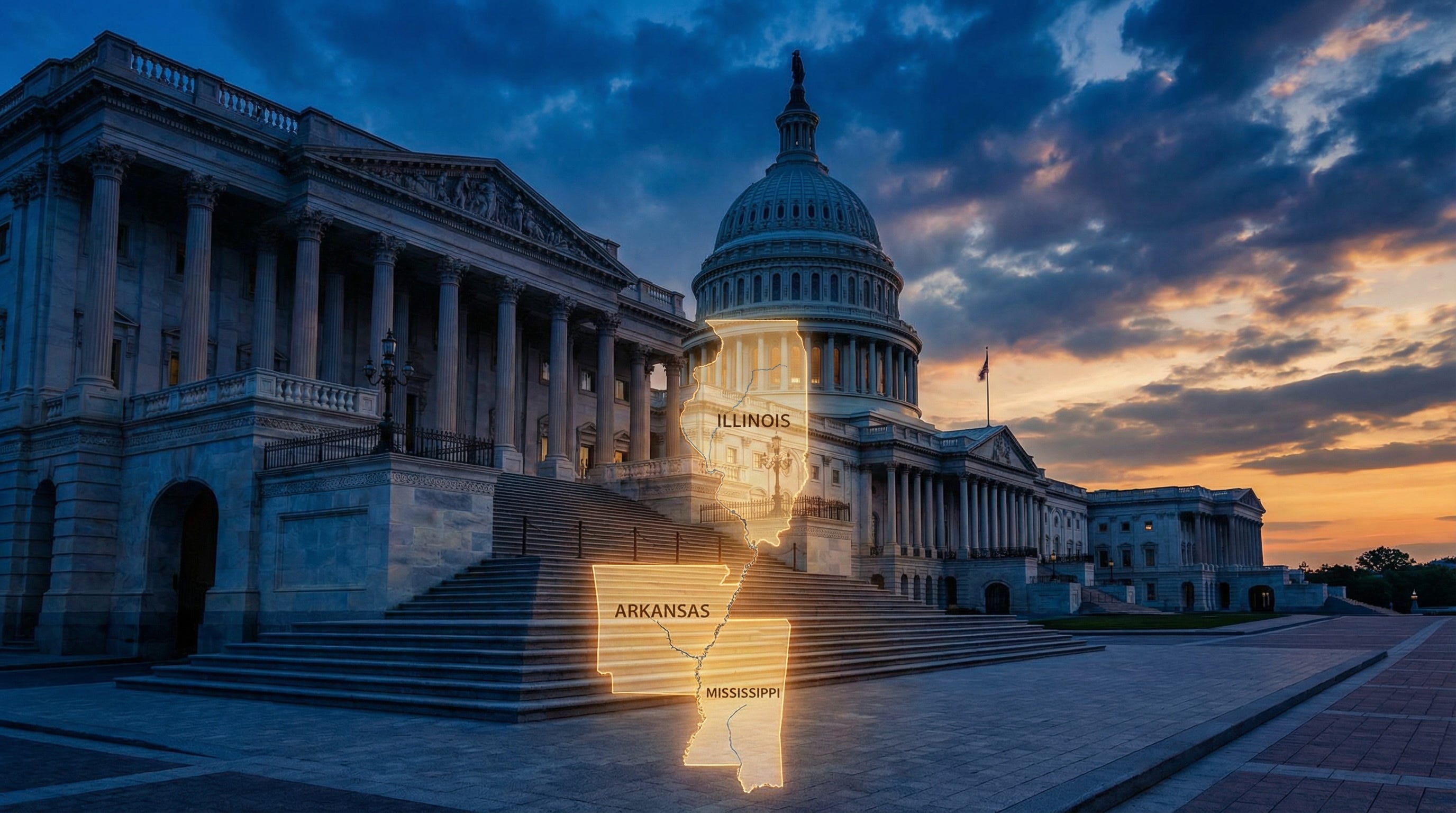
Voters in Arkansas, Mississippi and Illinois will cast ballots in the final three primaries of the month, closing out the first chapter of the 2026 midterm election cycle before a six-week pause in primary activity across the country. Arkansas holds its primary on March 3, Mississippi on March 10 and Illinois on March 17. After Illinois votes, no other state holds a primary until Indiana and Ohio on May 5. The three states together feature two U.S. Senate incumbents defending their seats, one wide-open Senate contest to replace a 30-year incumbent, a governor’s race and a combined total of 21 U.S. House seats. The U.S. Senate currently stands at 53 Republicans and 47 Democrats. The outcomes in these three states will not alter that balance on primary day, but the nominees chosen in March will compete in the November 3 general election, where Senate control remains in play.
Illinois: The Most Competitive Race West of the Appalachians
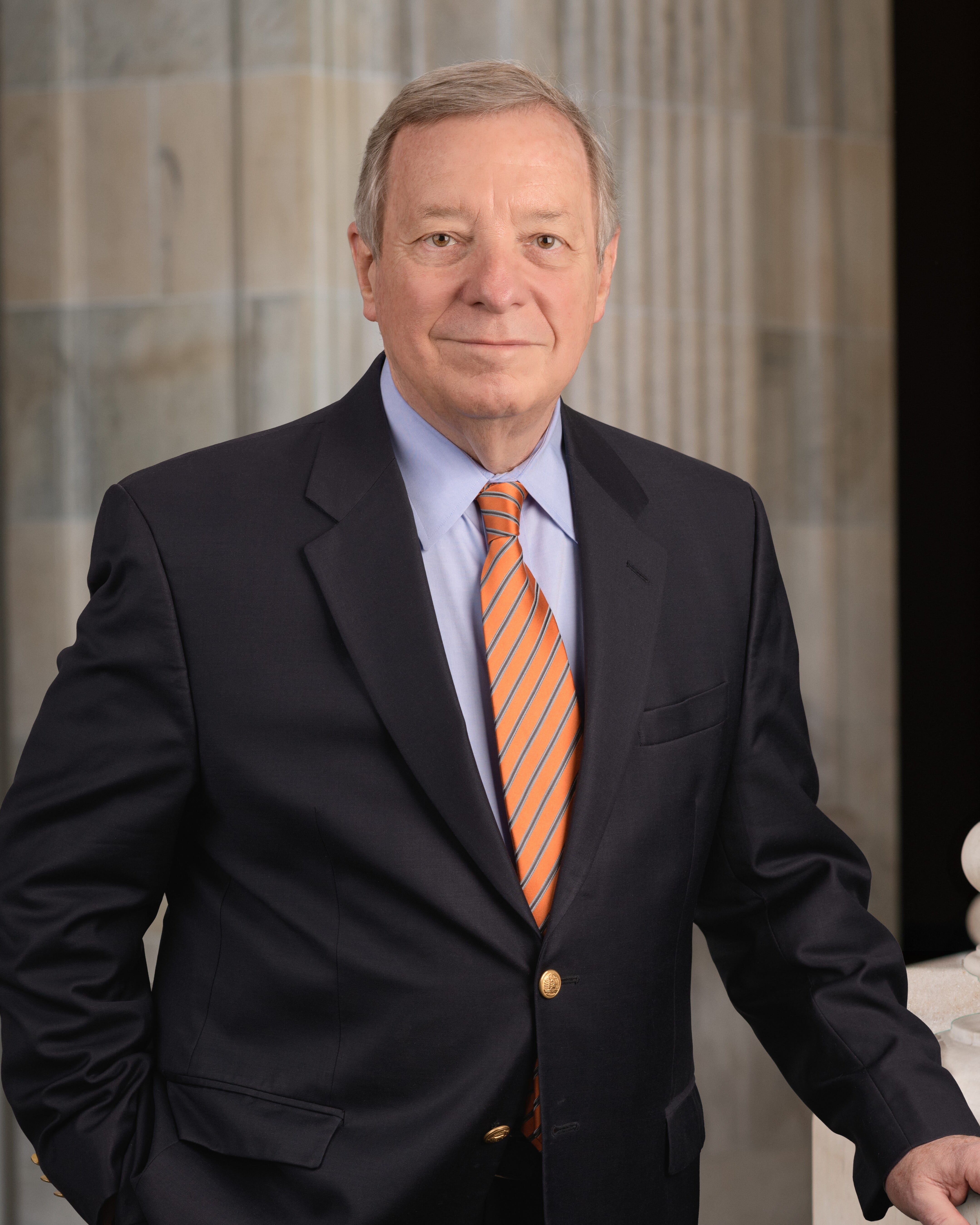
Illinois closes the March primary window on March 17 with the most consequential Senate race of the three states — an open seat fight to succeed Dick Durbin, who is retiring after 30 years in the U.S. Senate and 44 years in Congress. Durbin, first elected to the Senate in 1996, announced on April 23, 2025, that he would not seek a sixth term. His retirement opened the first Illinois Senate vacancy since 2010 and the first contest for this Class II seat since Durbin himself won it nearly three decades ago.
Illinois has not sent a Republican to the U.S. Senate since Mark Kirk lost his seat in 2016. The real contest on March 17 is the Democratic primary, where three prominent candidates are competing for the nomination with the general election widely expected to favor whoever emerges.
U.S. Rep. Raja Krishnamoorthi of Schaumburg entered the race on May 7, 2025, after transferring $19.3 million from his congressional campaign account. He has since expanded that advantage into a dominant fundraising position, reporting $28.5 million in total campaign funds through the Federal Election Commission’s year-end filing — accounting for approximately 75 percent of all money raised across the 16-candidate field. Krishnamoorthi, who has represented Illinois’ 8th Congressional District since 2017, has secured endorsements from the Teamsters and the American Federation of Government Employees. Born in New Delhi and raised in Peoria, he would become the 10th person of Asian American, Pacific Islander or Native Hawaiian descent ever to serve in the U.S. Senate if elected.
Lt. Gov. Juliana Stratton was the first Democrat to announce her candidacy, entering the race on April 24, 2025, one day after Durbin’s retirement announcement, and receiving the immediate endorsement of Gov. JB Pritzker. Stratton has raised $3.2 million and holds endorsements from Sen. Tammy Duckworth, House Speaker Emanuel Welch and EMILY’s List. She has pledged to accept no corporate PAC money. Pritzker separately contributed $5 million to an independent pro-Stratton political action committee in December 2025. Stratton has the deepest institutional support of the three frontrunners, backed by much of the Illinois Democratic establishment and a broad coalition of state legislators.
U.S. Rep. Robin Kelly of Matteson entered the race on May 6, 2025. Kelly, who has represented Illinois’ 2nd Congressional District since 2013 and served as chair of the Illinois Democratic Party from 2021 to 2022, has raised $2.9 million with $1.6 million cash on hand. She carries the endorsement of the Congressional Black Caucus PAC. If elected, Kelly, Stratton or fellow candidate Awisi Bustos would make history as one of three Black women simultaneously serving in the U.S. Senate, joining Sens. Angela Alsobrooks of Maryland and Lisa Blunt Rochester of Delaware. Kelly has campaigned on her record representing a district she describes as uniquely urban, suburban and rural.
All three leading candidates debated on January 26, 2026, in a forum hosted by the Chicago Sun-Times, WBEZ and the University of Chicago, and again on January 29 in a forum hosted by WLS-TV and Univision. Seven additional Democrats appear on the ballot, none of whom has matched the fundraising or endorsement totals of the three frontrunners.
On the Republican side, six candidates are competing for the nomination, led by Don Tracy, former chair of the Illinois Republican Party from 2021 to 2024, who has raised $2.1 million, the majority of which came from personal loans to his campaign. Tracy has been endorsed by former Sen. Mark Kirk. The remaining Republican candidates are Casey Chlebek, Jeannie Evans, Pamela Denise Long, R. Cary Capparelli and Jimmy Lee Tillman II. The Republican nominee will face a substantial structural disadvantage in the general election in a state that has voted Democratic for Senate in every election since 2002.
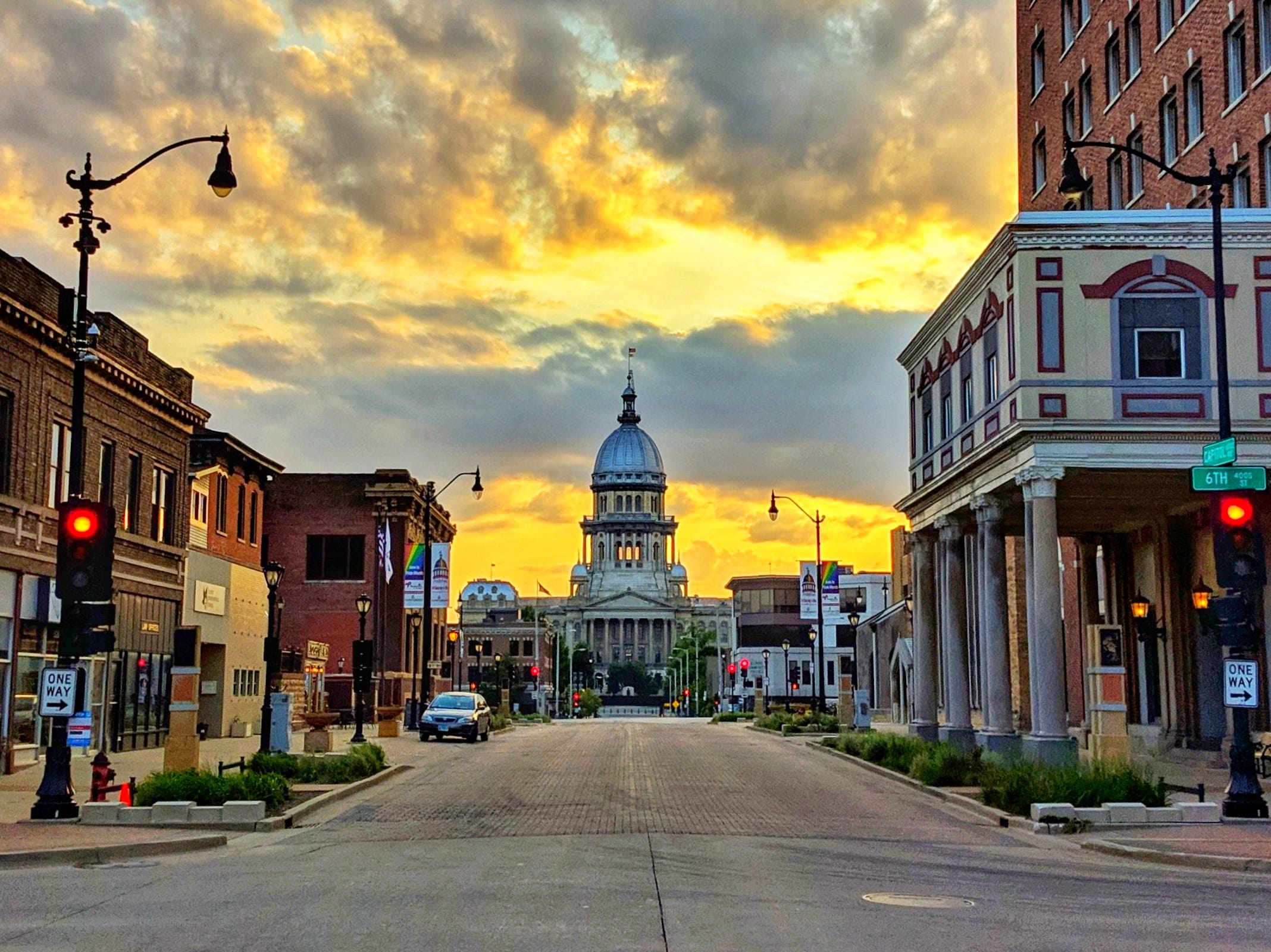
Kelly’s and Krishnamoorthi’s Senate campaigns have vacated their congressional seats, creating competitive open-seat primaries in IL-02 and IL-08 on the same March 17 ballot. All 17 Illinois House seats are up for election. Early voting began February 5, 2026.
Arkansas: Cotton’s Fortress and Sanders’ Second Term
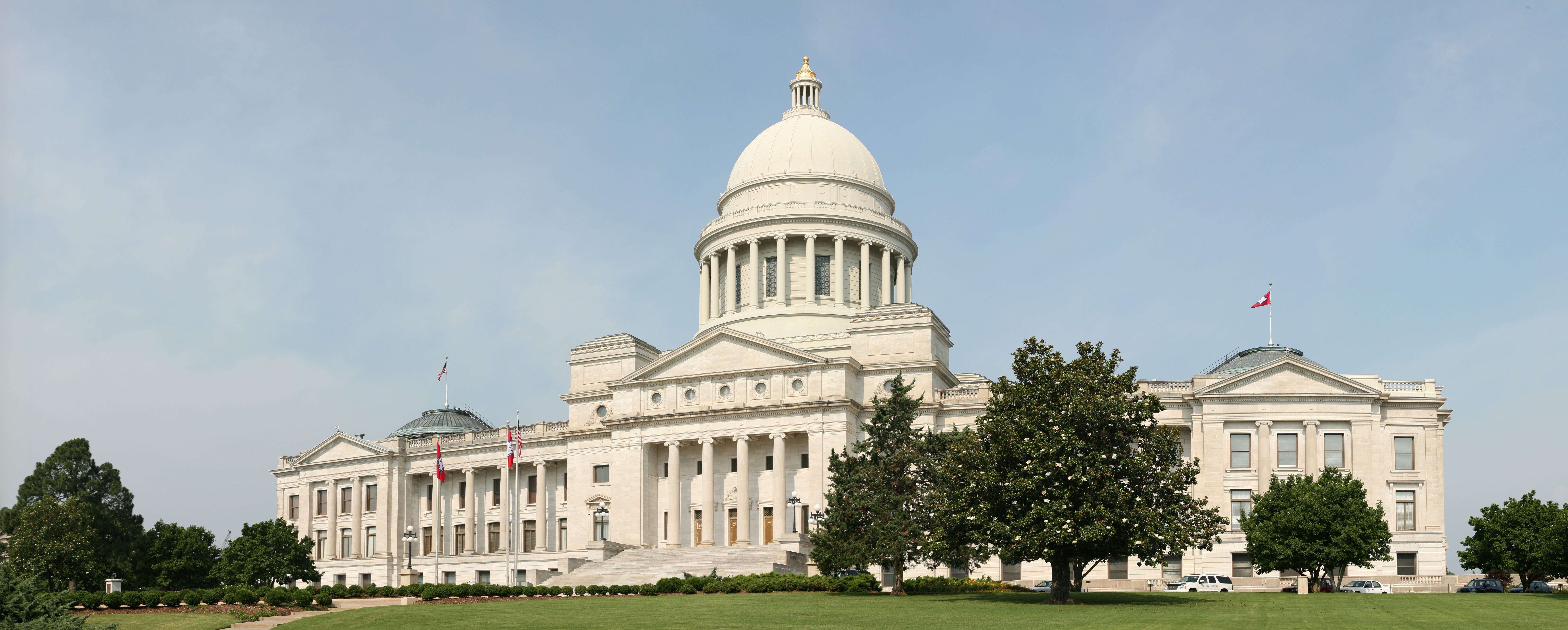
Arkansas opens the three-state primary sequence on March 3, with U.S. Sen. Tom Cotton seeking a third term and Gov. Sarah Huckabee Sanders running for re-election to a second. Neither faces a serious challenge from within their own party, but both seats will be contested in the November 3 general election.
Cotton, first elected in 2014 and re-elected in 2020, enters the primary with $9.6 million cash on hand, according to the Arkansas Democrat-Gazette, a figure more than three times what he carried into his 2020 race. He has secured endorsements from President Trump, Gov. Sanders, Lt. Gov. Leslie Rutledge, Attorney General Tim Griffin, Secretary of State Cole Jester and all four Arkansas House members — Rick Crawford, Steve Womack, French Hill and Bruce Westerman. Cotton serves as chair of the Senate Republican Conference and the Senate Select Committee on Intelligence.
Two Republicans are challenging Cotton in the March 3 primary. Micah Ashby of Bradford is a pastor who describes herself as a constitutional conservative. Jeb Little of Harrison is a state trooper. Neither has held elected office. Both have focused their campaigns on arguments that Cotton has not adequately represented Arkansas despite his national profile.
The Democratic primary features two candidates with sharply different backgrounds. Hallie Shoffner of Little Rock is a sixth-generation Arkansas farmer who holds degrees from Vanderbilt and the Clinton School of Public Service. She raised $1 million between July and December 2025 and has centered her campaign on agricultural policy, the cost of living and labor issues, describing the closure of her family’s 2,000-acre Jackson County soybean farm as her motivation to run. Ethan Dunbar is the mayor of Lewisville, a town of approximately 900 residents in Lafayette County, and a retired Army command sergeant major with more than 30 years of military service. No Democrat has won a statewide Arkansas race since 2010. The seat is rated safely Republican.
Sanders is running for a second term in the governor’s mansion, where she has no Republican primary opponent. She was elected in 2022 by a margin of 27.7 percentage points, becoming the first woman elected governor of Arkansas. She previously served as White House Press Secretary from 2017 to 2019. Her campaign has reported $4.2 million cash on hand.
The Democratic gubernatorial primary features State Sen. Fred Love of Mabelvale and Supha Xayprasith-Mays of Bentonville. Love, who has served in the Arkansas legislature since 2011 and is term-limited from seeking re-election to his Senate seat, has approximately $3,000 cash on hand. Xayprasith-Mays, a businesswoman and philanthropist who ran in the 2022 Democratic gubernatorial primary and received five percent of the vote, has approximately $2,200. The winner will face Sanders in November. Arkansas has not had a Democratic governor since Mike Beebe left office in 2015.
In Arkansas’ 2nd Congressional District, incumbent Rep. French Hill faces a Republican primary challenge from Chase McDowell, chairman of U.S. Term Limits. Democrat Chris Jones, who lost to Sanders in the 2022 governor’s race by 27.7 points, is running in the general election. In AR-04, incumbent Rep. Bruce Westerman faces no Republican primary opposition. The Democratic primary in AR-04 features Steven O’Donnell and James Russell. The March 3 primary also includes statewide races for Attorney General, Treasurer, Auditor, Secretary of State and an open Land Commissioner seat, with the current commissioner, Tommy Land, term-limited.
Mississippi: Hyde-Smith Defends, Democrats Eye an Unlikely Prize
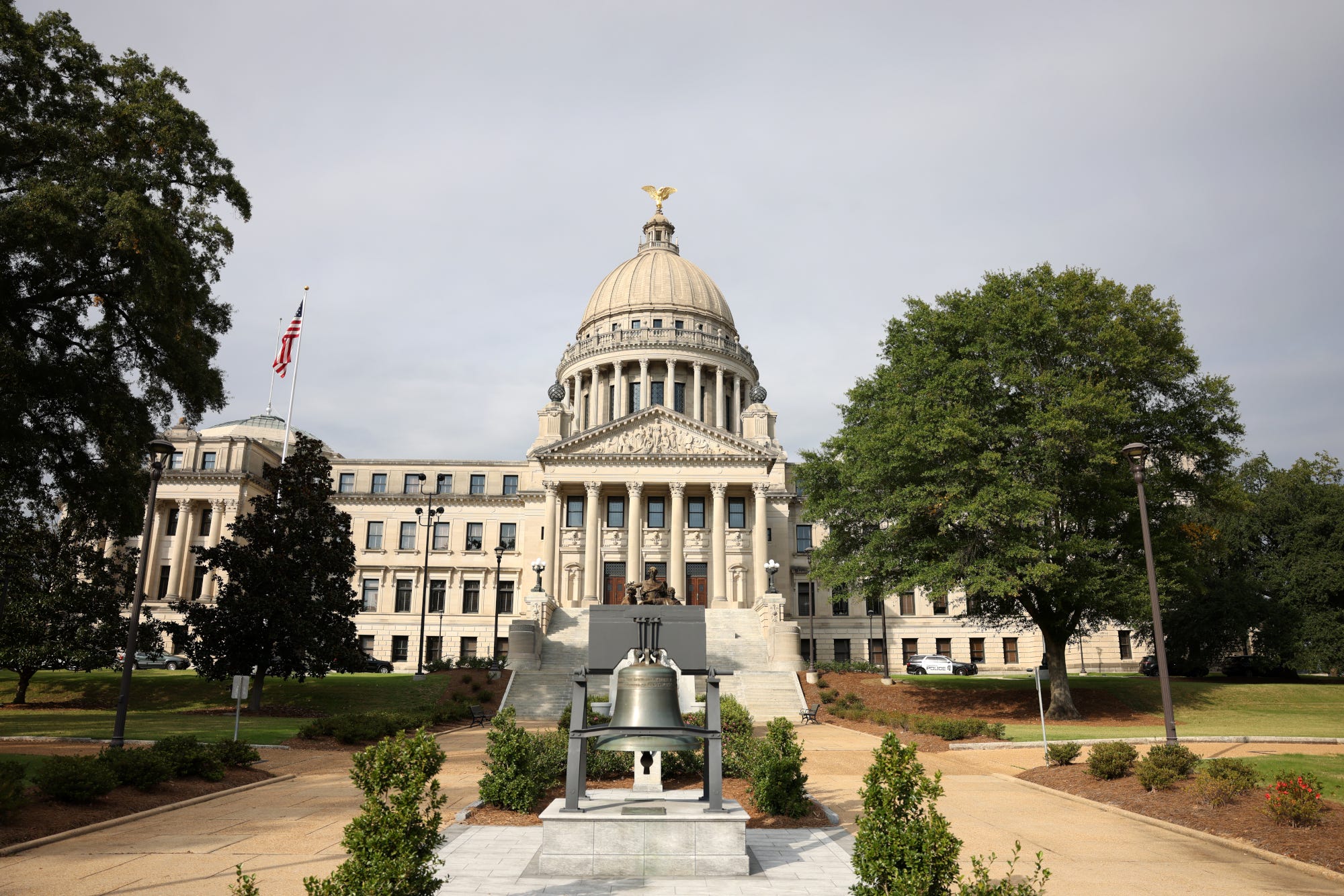
Mississippi holds its primary on March 10, with U.S. Sen. Cindy Hyde-Smith defending her seat against a primary challenge and a Democratic field hoping to compete in a state that has not sent a Democrat to the U.S. Senate since John Stennis won re-election in 1982.
Hyde-Smith, a native of Brookhaven, was appointed to the Senate in 2018 by then-Gov. Phil Bryant to replace retiring Sen. Thad Cochran. She won a special election later that year and won a full six-year term in 2020, defeating Democrat Mike Espy on both occasions. She is the first woman elected to represent Mississippi in Congress. Trump has endorsed her re-election, calling her “100% MAGA“ in a Truth Social post. Her endorsers include Gov. Tate Reeves, Sen. Roger Wicker and all three Mississippi Republican House members — Trent Kelly, Michael Guest and Mike Ezell. She enters the primary with $2.5 million cash on hand.
Her Republican primary opponent is Sarah Adlakha, a physician and business owner who has lived on the Mississippi Gulf Coast for 13 years after being born in Chicago. Adlakha has made transparency, term limits and a pledge to accept no lobbyist money the central themes of her campaign. She reports $122,000 cash on hand. Adlakha has argued that Hyde-Smith has grown disconnected from Mississippi constituents, while Hyde-Smith’s campaign has pointed to the senator’s committee assignments on Senate Appropriations and Senate Agriculture as evidence of her effectiveness for the state. The last incumbent senator in Mississippi to lose a re-election bid did so in 1942.
Mississippi holds an open primary, meaning any registered voter may choose either party’s ballot on March 10. A runoff is scheduled for April 7 if no candidate receives a majority. The general election is November 3, with a general election runoff set for December 1 if needed.
Three Democrats are competing in the Democratic primary: Scott Colom, the district attorney for Mississippi’s Golden Triangle region based in Columbus; Albert Littell; and Priscilla W. Till. Ty Pinkins is running as an independent and will appear on the November 3 general election ballot regardless of primary outcomes.
All four Mississippi House seats are up for election. Incumbents Trent Kelly (MS-1), Michael Guest (MS-3) and Mike Ezell (MS-4) are running for re-election. MS-2, the state’s majority-minority district currently held by veteran Democratic Rep. Bennie Thompson, who has represented the seat since 1993, features the only competitively watched House primary in the state. Mississippi does not hold a governor’s race in even-numbered years. Gov. Tate Reeves was re-elected in 2023 and is not on the 2026 ballot.
What Happens After March 17
When Illinois polls close on the evening of March 17, the first chapter of the 2026 midterm primary season will be complete. Arkansas, North Carolina and Texas voted March 3. Mississippi votes March 10. Illinois votes March 17. The next primaries anywhere in the country are Indiana and Ohio on May 5 — a six-week pause before the calendar accelerates toward November.
In Illinois, the Democratic nominee will be decided and the general election campaign to hold Durbin’s seat will begin. In Arkansas, Cotton and Sanders will be confirmed as their party’s nominees and will begin the general election campaign in a state where Republicans have held every statewide office since 2015. In Mississippi, Hyde-Smith will either have turned back Adlakha’s challenge or faced an outcome that would be the first of its kind in the state in more than 80 years.
Voters in all three states can find registration information, polling locations and identification requirements at their state election offices: Arkansas Secretary of State (sos.arkansas.gov), Mississippi Secretary of State (sos.ms.gov) and the Illinois State Board of Elections (elections.il.gov). The general election in all three states is November 3, 2026.