
What Is the One Big Beautiful Bill? A Plain-English Guide to P.L. 119-21
With the 2026 midterms approaching, one law keeps coming up. Here is what it actually is and what it actually says.

By Scott Burton Official (10 min read)
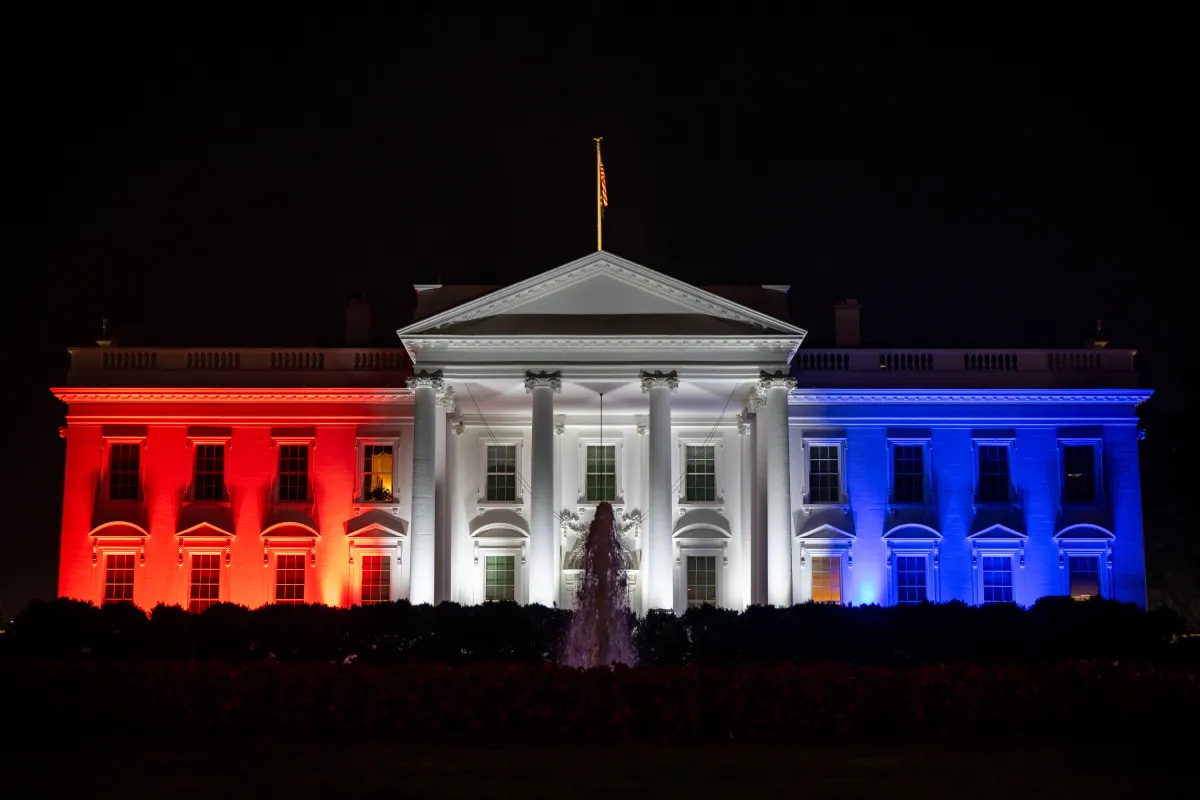
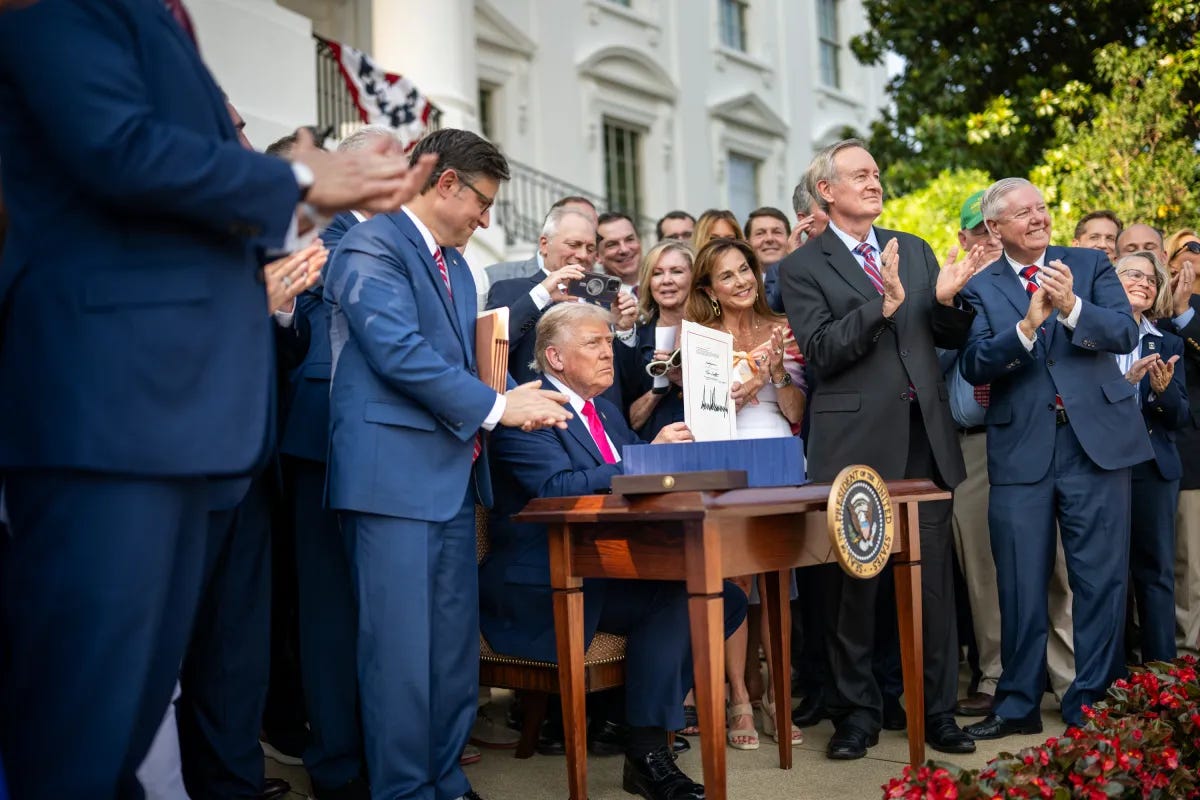
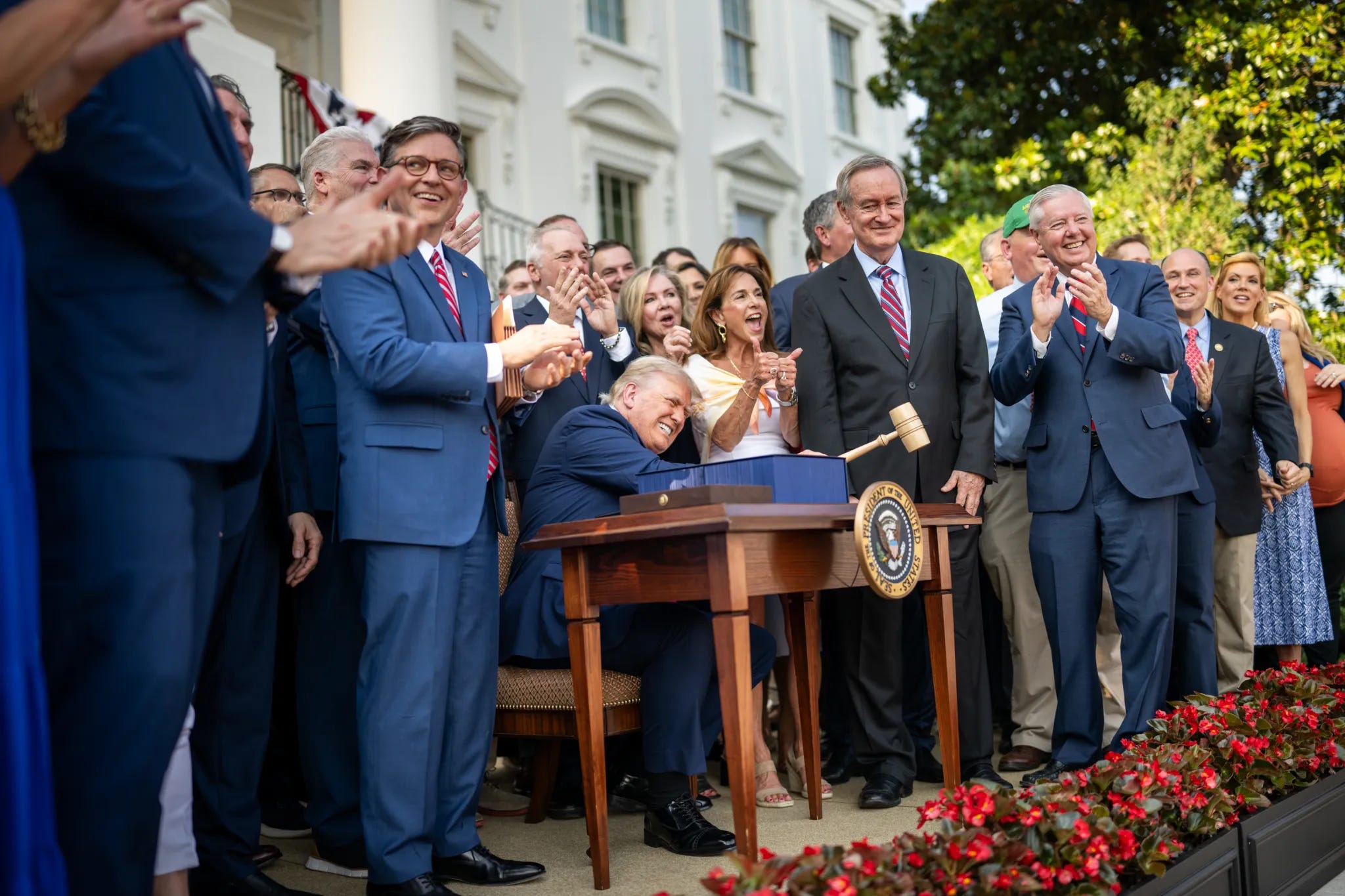
With the 2026 midterm elections drawing closer, one piece of legislation comes up in nearly every conversation about the direction of the country: the One Big Beautiful Bill Act. Signed into law on July 4, 2025, the law is the central piece of President Donald Trump‘s second-term domestic agenda. Its official designation is H.R. 1, Public Law 119-21.
The bill passed through the budget reconciliation process — a procedural path that allows certain fiscal legislation to pass the Senate with a simple majority rather than the standard 60-vote threshold. The Senate passed it 51–50 on July 1, 2025, with Vice President JD Vance casting the tiebreaking vote. The House of Representatives passed the Senate version 218–214 on July 3, 2025. President Trump signed it into law the following day.
The law contains hundreds of provisions spanning taxes, health programs, food assistance, student loans, border security, national defense, and energy policy. What follows is a plain-English guide to what each major section of the law actually says.
Taxes
The tax title is the largest component of the One Big Beautiful Bill Act and the one with the most immediate impact on American households.
The law permanently extends the individual income tax rates established by the 2017 Tax Cuts and Jobs Act (TCJA). Those rates were scheduled to expire at the end of 2025, which would have triggered automatic increases for most taxpayers in 2026. The OBBBA cancels that expiration and makes the TCJA rates permanent.
The law also creates several new temporary tax provisions, all retroactive to January 1, 2025. Workers who receive tips may deduct up to $25,000 in qualified tip income if filing jointly, or up to $12,500 if filing as a single filer. This provision expires at the end of 2028. Workers who receive overtime pay may deduct up to $12,500 in qualified overtime compensation annually. This provision also expires at the end of 2028. Taxpayers 65 years of age and older receive a new $6,000 deduction, also expiring in 2028. Taxpayers who take out auto loans may deduct up to $10,000 in interest annually, expiring in 2028.
The standard deduction is increased and made permanent. The Child Tax Credit is raised to $2,200 per child for tax years 2025 through 2028 and made permanent at $2,000 per child beginning in 2026. 100 percent bonus depreciation for qualifying business investment is restored and made permanent. The estate tax exemption is permanently increased.
The State and Local Tax (SALT) deduction cap, which has been set at $10,000 since 2017, is raised to $40,000 for taxpayers with incomes below $500,000. This increase is effective for tax years 2025 through 2029, after which the cap reverts to $10,000.
The law creates Trump Accounts — tax-deferred savings and investment accounts for children. The federal government provides a $1,000 seed deposit at birth for eligible children. Individual contributions are capped at $5,000 per year per child. Employer contributions are capped at $2,500 per year. Funds must be invested in qualifying mutual funds or exchange-traded funds that track a U.S. stock index such as the S&P 500.
The law also establishes the first national school choice program at the federal level. Beginning January 1, 2027, taxpayers may claim a dollar-for-dollar nonrefundable federal tax credit of up to $1,700 per year for cash contributions to qualifying Scholarship Granting Organizations (SGOs). These organizations in turn award scholarships to eligible K–12 students for qualifying education expenses including tuition, fees, books, supplies, tutoring, uniforms, and technology. Eligible students must be from households earning below 300 percent of their area’s median income. States must elect to participate in the program and submit a list of qualifying SGOs to the IRS. The program takes effect for tax year 2027.
Medicaid
The OBBBA introduces the most significant changes to Medicaid since the program’s expansion under the Affordable Care Act (ACA). Federal Medicaid spending reductions under the law total $886.8 billion over the 2025–2034 period, per CBO‘s October 2025 supplemental analysis.
The law imposes an 80-hour-per-month community engagement requirement on able-bodied adults ages 19 to 64 who are enrolled in Medicaid through ACA expansion. Enrollees must document that they are working, in job training, enrolled in an educational program, or performing community service for at least 80 hours per month to maintain eligibility. Exemptions apply to parents of children 13 years old and under, pregnant and postpartum individuals, and those certified as medically frail. States must implement this requirement no later than December 31, 2026.
The law also reduces the frequency of eligibility redeterminations from every 12 months to every 6 months, meaning enrollees must re-verify their eligibility twice as often as before. This provision takes effect upon enactment.
The law restricts states’ ability to use provider taxes — fees charged to hospitals and health systems — to generate the state share of Medicaid funding. This mechanism has been widely used by states across the country to maximize federal matching funds.
A one-year ban on Medicaid funding to abortion providers is included in the law.
To offset the impact of these changes on rural health infrastructure, the law establishes the Rural Health Transformation Program, which appropriates $10 billion per year from 2026 through 2030 — $50 billion total — for states to support rural hospitals and health facilities. States were required to submit applications to the Centers for Medicare and Medicaid Services (CMS) by December 31, 2025. States that newly adopt Medicaid expansion after January 1, 2026 will no longer receive the enhanced federal matching rate that was previously available to new expansion states.
SNAP
The OBBBA makes the largest changes to the Supplemental Nutrition Assistance Program (SNAP) — formerly known as food stamps — in the program’s history. The law reduces federal SNAP spending by $186 billion over the 2025–2034 period, representing approximately 20 percent of projected program spending. More than 42 million Americans currently receive SNAP benefits.
The law expands SNAP work requirements to able-bodied adults ages 18 through 64. Under prior law, the requirement applied to adults ages 18 through 54. The new requirement — which took effect November 1, 2025 — mandates that covered individuals work, participate in job training, or perform volunteer service for at least 80 hours per month to maintain eligibility. Adults who fail to meet the requirement may receive benefits for no more than three months in any 36-month period.
Several groups previously exempt from the requirement are now covered under the new rules. Parents and caretakers of children 14 years of age and older are now subject to work requirements. Veterans, homeless individuals, and former foster youth no longer receive automatic exemptions.
The law redefines the Thrifty Food Plan — the federal formula used to calculate SNAP benefit levels — in a way that limits future increases to benefit amounts. This change takes effect upon enactment.
Beginning in 2027, the administrative cost-sharing arrangement between the federal government and states shifts from a 50–50 split to a 75 percent federal and 25 percent state contribution. Beginning in 2028, states whose SNAP payment error rates exceed 6 percent will be required to share in program benefit costs as well.
The law also removes SNAP eligibility for certain categories of legal non-citizens, including refugees, asylees, and recipients of certain forms of humanitarian parole who were previously eligible for the program.

Student Loans
The OBBBA restructures federal student lending beginning July 1, 2026. The 2025–26 academic year is not affected. All changes apply to new loans disbursed on or after July 1, 2026.
The Grad PLUS loan program — which previously allowed graduate and professional students to borrow up to the full cost of attendance — is eliminated for new borrowers beginning July 1, 2026. Students already enrolled in a credentialed program who borrowed a federal loan before that date retain access to Grad PLUS for up to three additional academic years or until program completion, whichever comes first.
New annual and lifetime borrowing caps take effect on July 1, 2026. Graduate students are capped at $20,500 per year in unsubsidized loans, with a $100,000 aggregate lifetime limit. Students in professional degree programs — including law and medicine — are capped at $50,000 per year, with a $200,000 aggregate lifetime limit. Parent PLUS loans are capped at $20,000 per student per year, with a $65,000 lifetime limit per dependent student.
The income-driven repayment landscape is restructured for new borrowers. The SAVE Plan, Pay As You Earn (PAYE), and Income-Contingent Repayment (ICR) are eliminated for loans disbursed on or after July 1, 2026. Borrowers with existing loans in these plans must transition to a new plan by June 30, 2028. Income-Based Repayment (IBR) remains available for borrowers who do not take out new loans after July 1, 2026. The SAVE Plan had already been blocked by federal courts prior to the OBBBA‘s enactment.
New borrowers will have two repayment options. The first is a tiered Standard Repayment Plan with fixed payments over a term of 10 to 25 years depending on total loan balance. The second is the new Repayment Assistance Plan (RAP), which calculates monthly payments at 1 to 10 percent of adjusted gross income, with a $10 monthly minimum. Each dependent claimed on a borrower’s tax return reduces the monthly payment by $50. Any remaining balance is forgiven after 360 qualifying monthly payments — 30 years.
Border Security and Defense
The OBBBA represents the largest single investment in border security and immigration enforcement since the creation of the Department of Homeland Security in 2003. Total new funding for border and interior enforcement activities across all relevant agencies totals more than $170.7 billion, available through September 30, 2029.
The law appropriates $46.55 billion to Customs and Border Protection (CBP) for border wall construction, installation, and improvement of physical barriers along the southern and northern borders, along with access roads, cameras, lights, sensors, and related technology. The White House has stated the funding supports construction of 701 miles of primary wall, 900 miles of river barriers, 629 miles of secondary barriers, and 141 miles of additional infrastructure.
The law appropriates $45 billion to Immigration and Customs Enforcement (ICE) for adult and family residential detention facilities, available through FY2029. $29.9 billion is appropriated to ICE for enforcement and deportation operations, including hiring and training of additional agents, transportation and removal operations, fleet modernization, and expansion of 287(g) agreements with state and local law enforcement. The total ICE funding increase through 2029 brings the agency’s budget from approximately $10 billion annually to more than $100 billion over the funding window, making it the single most funded federal law enforcement agency in the country.
$4.1 billion is appropriated for hiring and training new Border Patrol agents and CBP support personnel. An additional $2 billion is provided for retention, hiring, and performance bonuses. $6.2 billion funds border security technology and surveillance systems. $5 billion is allocated for CBP facility construction and improvement.
A $10 billion State Border Security Reinforcement Fund is established to reimburse states for border barrier construction, interdiction activities, and relocation of illegal aliens. Notably, this fund covers qualifying activities dating back to January 2021. A separate $3.5 billion BIDEN Reimbursement Fund — formally the Bridging Immigration-related Deficits Experienced Nationwide fund — reimburses states and local jurisdictions that have assisted in apprehending, prosecuting, transporting, and detaining criminal aliens.
New fees are imposed on immigration benefit applications. A $100 fee is required to apply for asylum, with an additional $100 annual fee for each year a case remains pending. A $550 fee applies to initial work authorization applications, with a $275 renewal fee.
The law appropriates $150 billion in new national defense spending, including funding for military personnel, equipment, and infrastructure.
Energy
The OBBBA eliminates or phases out a series of clean energy tax credits established under prior law while maintaining and expanding support for domestic fossil fuel production.
The $7,500 federal tax credit for the purchase of new electric vehicles under Section 30D was terminated effective September 30, 2025. The $4,000 credit for used electric vehicles under Section 25E was also terminated. The Energy Efficient Home Improvement Credit under Section 25C — which covered insulation, windows, doors, and heat pumps — was terminated for property placed in service after December 31, 2025. The Residential Clean Energy Credit under Section 25D — which covered solar panels, battery storage, fuel cells, and geothermal systems — was terminated for expenditures made after December 31, 2025.
Wind and solar electricity production credits remain available for projects that begin construction no later than July 5, 2026, or that are placed in service by the end of 2027.
The Greenhouse Gas Reduction Fund, established under the Inflation Reduction Act, is eliminated. Federal penalties for noncompliance with Corporate Average Fuel Economy (CAFE) standards are eliminated. The law includes provisions expanding oil and gas leasing access on federal lands and streamlining permitting for domestic energy production projects.

The One Big Beautiful Bill Act — H.R. 1, P.L. 119-21 — was signed into law on July 4, 2025. It is the product of the budget reconciliation process under the 119th United States Congress. Its provisions span taxes, health programs, food assistance, student loans, border security, national defense, and energy policy. Effective dates range from 2025 through 2028 depending on the provision.
The full text of the law is available at https://www.congress.gov/bill/119th-congress/house-bill/1
Lots of information I did not know about. Liked the photos.