
14 Days to March 3: Texas Senate Primaries Enter Final Stretch as North Carolina Early Voting Surges
Texas Senate Primary 2026: Paxton Leads GOP Field, Crockett-Talarico Race Too Close to Call - Latest Polls and Updates

By Scott Burton Official (14 min read)
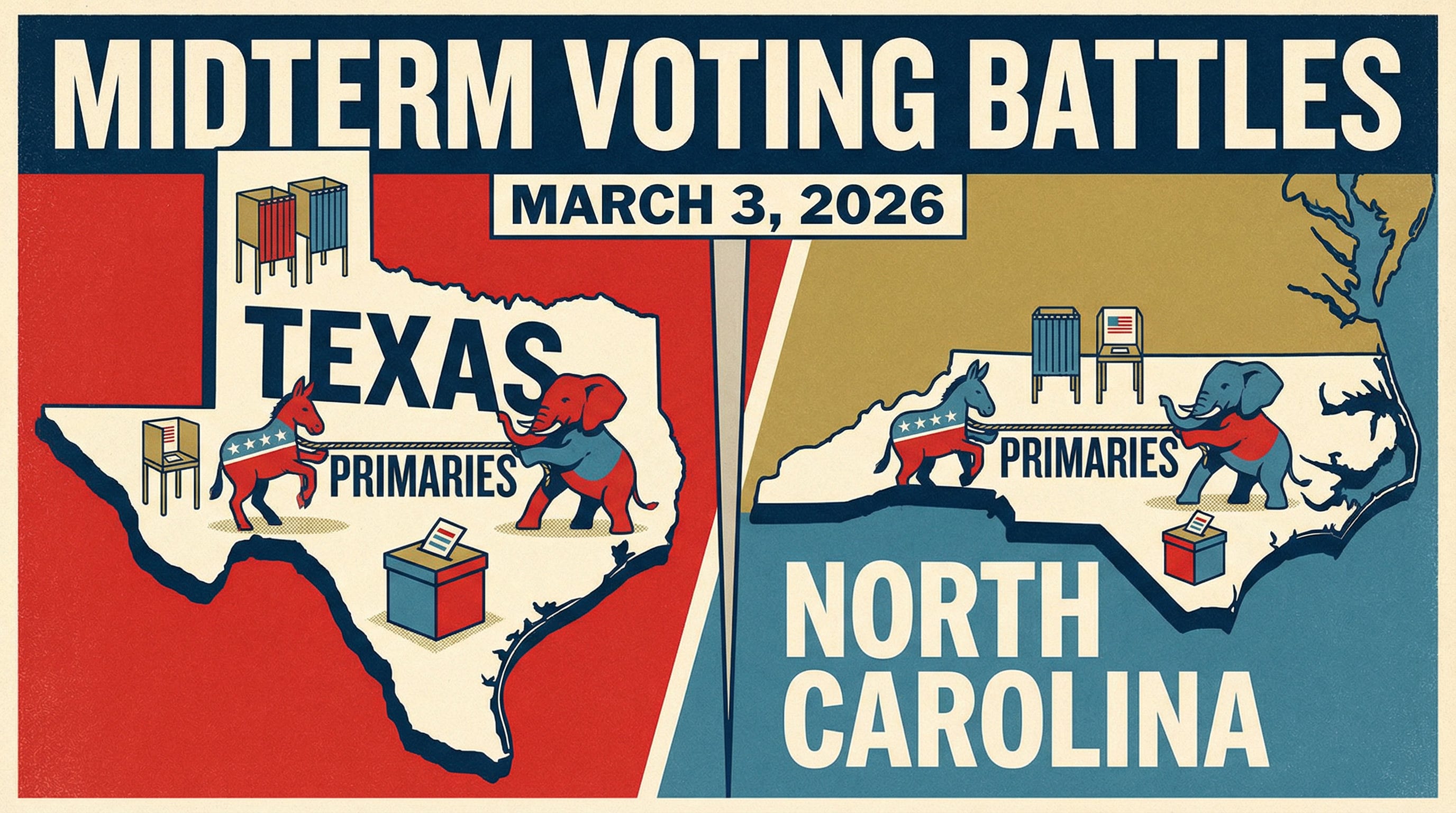
The first votes of the 2026 midterm election cycle will be cast in 14 days on March 3, 2026, when Arkansas, North Carolina, and Texas hold primary elections that will shape the battle for control of the United States Senate. President Donald Trump told reporters aboard Air Force One on Monday, February 16, that he has not yet decided whether to endorse a candidate in the Texas Republican Senate primary, saying the race has “a ways to go.” Early voting in Texas begins today, Tuesday, February 17, 2026, with polling showing competitive races in both the Republican and Democratic primaries.
Texas features competitive primaries in both parties for the seat currently held by Senator John Cornyn, who is seeking a fifth term. In the Republican primary, Texas Attorney General Ken Paxton leads Cornyn and U.S. Representative Wesley Hunt in the most expensive GOP primary in the state’s history. In the Democratic primary, two conflicting polls show U.S. Representative Jasmine Crockett and State Representative James Talarico in a competitive race following former Representative Colin Allred‘s withdrawal in December 2025.
North Carolina voters began casting early ballots on Thursday, February 12, 2026, for a Senate seat that could determine which party controls the chamber in 2027. Election officials in Wake County reported first-day turnout surpassing levels seen at the same point in the 2024 primary election. Former Governor Roy Cooper, a Democrat, and former Republican National Committee Chairman Michael Whatley, a Republican, are expected to win their party primaries and face each other in a November toss-up race.
The Senate currently has a 53-47 Republican majority. Competitive races in Texas and North Carolina could affect control of the chamber. This article examines the latest polling data, campaign finance numbers, candidate strategies, and early voting developments in both states.
Texas Republican Primary: Paxton Leads Cornyn and Hunt

Texas Attorney General Ken Paxton has emerged as the frontrunner in the Republican primary for U.S. Senate, leading Senator John Cornyn and Representative Wesley Hunt according to recent polling. The primary will determine which Republican advances to face the Democratic nominee in the November 3, 2026 general election.
A University of Houston Hobby School of Public Affairs poll conducted from January 20 through January 31, 2026, showed Paxton with 38 percent support among likely Republican primary voters. Cornyn received 31 percent and Hunt received 17 percent. Fourteen percent of voters remained undecided. A separate Pulse Decision Science poll released in February 2026 confirmed Paxton‘s lead, showing him at 36 percent to Cornyn‘s 27 percent and Hunt‘s 15 percent, with 22 percent undecided. Both polls show Paxton with a clear lead heading into the final two weeks of the primary.
The University of Houston poll tested a hypothetical runoff scenario between Paxton and Cornyn. In that matchup, Paxton defeated Cornyn 51 percent to 40 percent, with 9 percent undecided. Texas requires a candidate to receive more than 50 percent of the vote to win a primary outright. If no candidate reaches that threshold on March 3, the top two finishers advance to a runoff election on May 26, 2026. Current polling suggests a runoff between Paxton and Cornyn is virtually certain.
Paxton has served as Texas attorney general since 2015. He survived an impeachment trial in the Texas Legislature in 2023 and has positioned himself as a vocal supporter of President Trump‘s policies. Paxton has filed numerous lawsuits challenging federal policies on immigration, elections, and other issues during his tenure as attorney general.
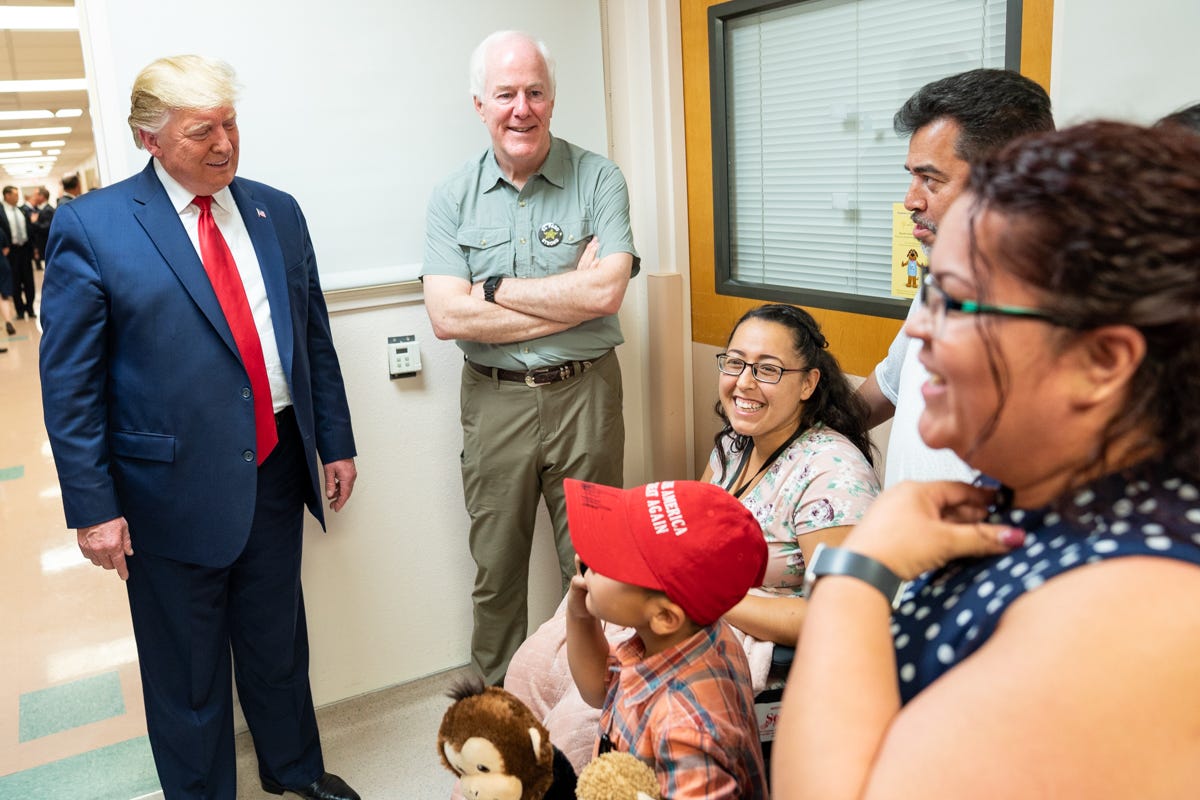
Cornyn was first elected to the Senate in 2002 after serving as Texas attorney general and as a justice on the Texas Supreme Court. He has held leadership positions in the Senate Republican caucus and currently serves as a senior member of the Judiciary Committee. Cornyn voted in favor of the SAVE America Act, which passed the House 218-213 on February 11, 2026, and includes provisions for voter identification and proof of citizenship requirements for federal elections.
Hunt was elected to the U.S. House in 2022 and represents Texas‘s 38th congressional district. Hunt, a U.S. Army veteran, has positioned himself as a younger alternative who can appeal to both establishment Republicans and Trump supporters. The University of Houston poll found that 55 percent of Texas Republican primary voters said they would be more likely to vote for a candidate endorsed by President Trump, underscoring how critical his eventual endorsement may be to the outcome of either the primary or the May 26, 2026 runoff.
Campaign finance reports filed with the Federal Election Commission through January 31, 2026, show Cornyn has raised $35 million and reported $18 million in cash on hand. Paxton has raised $10 million and reported $4.2 million in cash on hand. Hunt has raised $8 million and reported $3.1 million in cash on hand. Cornyn has received approximately 65 percent of his contributions from individual donors and 35 percent from political action committees. He has been endorsed by Senate Majority Leader John Thune and numerous Senate Republicans. Paxton has received approximately 80 percent of his contributions from individual donors and 20 percent from PACs. Hunt has received approximately 70 percent from individuals and 30 percent from PACs.
President Trump has not endorsed any candidate in the race despite public requests from all three campaigns. Speaking to reporters aboard Air Force One on Monday, February 16, Trump said: “I just haven’t made a decision on that race yet. It’s got a ways to go, and I haven’t. I like all three of them, actually. Those are the toughest races. They’ve all supported me. They’re all good. You’re supposed to pick one, so we’ll see what happens. But I support all three.” A Trump endorsement is considered critical to the outcome of either the primary or a potential runoff, given that 55 percent of Texas Republican primary voters said they would be more likely to support a Trump-endorsed candidate.
The candidates have pursued different campaign strategies in the final weeks before the primary. Paxton has emphasized his record of challenging federal policies and his loyalty to Trump‘s agenda, positioning himself as a fighter against federal overreach. Cornyn has highlighted his seniority in the Senate, his committee assignments, and his ability to deliver results for Texas through legislative experience. Hunt has focused on generational change and his military service record while attempting to bridge the divide between establishment Republicans and the party’s populist wing.
Early voting in Texas began Tuesday, February 17, 2026, and runs through Friday, February 28, 2026. Election Day is Tuesday, March 3, 2026. Texas requires voters to present photo identification at polling places. Acceptable forms of identification include a Texas driver’s license, Texas Election Identification Certificate (free), U.S. passport, U.S. military ID, or other government-issued photo ID.
Texas Democratic Primary: Crockett and Talarico in Contested Race
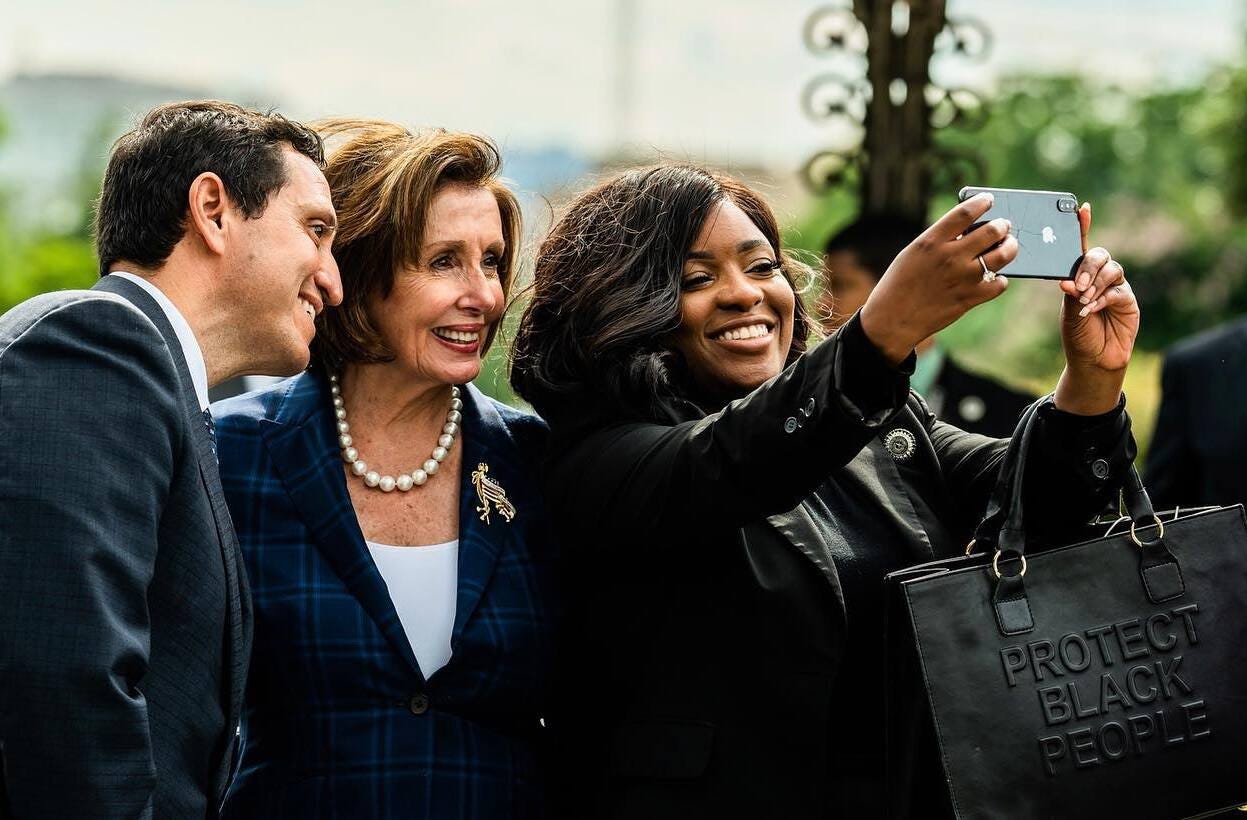
U.S. Representative Jasmine Crockett and State Representative James Talarico are competing in a contested Democratic primary for U.S. Senate, with two recent polls showing conflicting results. The race took shape after former Representative Colin Allred dropped out on the final day to file for candidacy.
Allred represented Texas‘s 32nd congressional district from 2019 to 2025. He challenged Senator Ted Cruz in the November 2024 general election and lost 53 percent to 45 percent. On July 1, 2025, Allred announced he would run for Senate in 2026, targeting Cornyn‘s seat. On December 8, 2025, the final day to file candidacy papers for the March 3 primary, Allred withdrew from the race, citing fundraising challenges and the difficulty of mounting a second statewide campaign within two years. Allred subsequently endorsed Crockett for the Democratic nomination following a controversy in which Talarico was accused of calling Allred a “mediocre Black man” in a private conversation. Talarico disputed the characterization as a misrepresentation of his words.
Crockett entered the race the same day Allred withdrew. Crockett represents Texas‘s 30th congressional district, which includes parts of Dallas. She was elected to Congress in 2022 and is serving her second term. Crockett has gained national attention as a frequent critic of the Trump administration and appears regularly on cable news programs.
Talarico represents a Texas House district in the Round Rock area north of Austin. He was elected to the Texas House in 2018 and worked as a middle school teacher before entering politics.
Two polls released in recent weeks show conflicting results in the Texas Democratic primary. A University of Houston Hobby School of Public Affairs poll conducted from January 20 through January 31 showed Crockett with 47 percent support compared to Talarico‘s 39 percent and 2 percent for Ahmad Hassan, with 12 percent undecided.
However, an Emerson College Polling/Nexstar Media survey released on January 15, 2026, showed Talarico leading Crockett 47 percent to 38 percent, with 15 percent undecided. Emerson College Polling executive director Spencer Kimball noted that Talarico had built support among Hispanic voters (59 percent) and white voters (57 percent), while 80 percent of Black Democratic primary voters supported Crockett. Men supported Talarico 52 percent to 30 percent, while women were roughly evenly split at 44 percent for Talarico and 43 percent for Crockett.
The conflicting polls reflect a genuinely competitive race. The University of Houston poll, the more recent of the two surveys, shows Crockett with a lead outside the margin of error of plus or minus 4.18 percentage points. The Emerson poll has a margin of error of plus or minus 4.8 percentage points. Voters and analysts should treat both sets of numbers with caution until additional polling is released.
Campaign finance reports show Crockett has raised $8.2 million through January 31, 2026, despite entering the race on December 8, 2025. Talarico has raised $4.1 million. Crockett‘s fundraising advantage reflects her national profile and donor network built during her time in Congress.
Crockett has 92 percent name recognition among Democratic primary voters according to the University of Houston poll. Talarico has 68 percent name recognition. This gap in voter familiarity represents a significant advantage for Crockett in the race.
The two candidates debated on January 24, 2026, at the Texas AFL-CIO COPE Convention in Georgetown, Texas. Both emphasized economic issues including wages, labor rights, and corporate accountability. Crockett highlighted her experience in Congress and her work on national issues. Talarico focused on Texas-specific concerns including education funding and his record in the state legislature.
The Democratic primary winner faces long odds in the general election. Texas has not elected a Democrat to statewide office since 1994. Republicans are favored to win the Senate seat regardless of which Democrat wins the primary. However, polling conducted in early February 2026 showed closer-than-expected general election matchups. A hypothetical race between Paxton and Crockett showed a 46 percent to 46 percent tie. A race between Cornyn and Crockett showed Cornyn leading by 2 percentage points.
Republican strategists have indicated they prefer to face Crockett in the general election, believing her progressive voting record and national profile as a Trump critic make her easier to defeat in Texas than a more moderate Democrat. Democrats are divided on whether Crockett‘s ability to energize the party base outweighs concerns about her electability in a statewide race.
Early voting in Texas began Tuesday, February 17, 2026, and runs through Friday, February 28, 2026. Election Day is Tuesday, March 3, 2026.
North Carolina: Early Voting Underway in Preview of November Toss-Up
North Carolina began early voting on Thursday, February 12, 2026, for primary elections that will determine which candidates face each other in a Senate race that could decide control of the chamber. 319 early voting sites opened statewide, a 6 percent increase from the 301 sites available during the May 2022 primary. The increase also represents a jump from 45,512 hours to 48,048 hours of early voting availability compared to the 2022 primary.
Election officials in Wake County, home to the state capital Raleigh, reported that first-day turnout surpassed levels seen at the same point in the 2024 primary election. Wake County Board of Elections Director Olivia McCall said: “We already are surpassing the same number that we had from the 2024 primary election. If that trends, we’re going to see record-breaking turnout.” In the 2022 primary, 59 percent of voters cast ballots on Election Day, 39 percent during early voting, and 2 percent by mail.
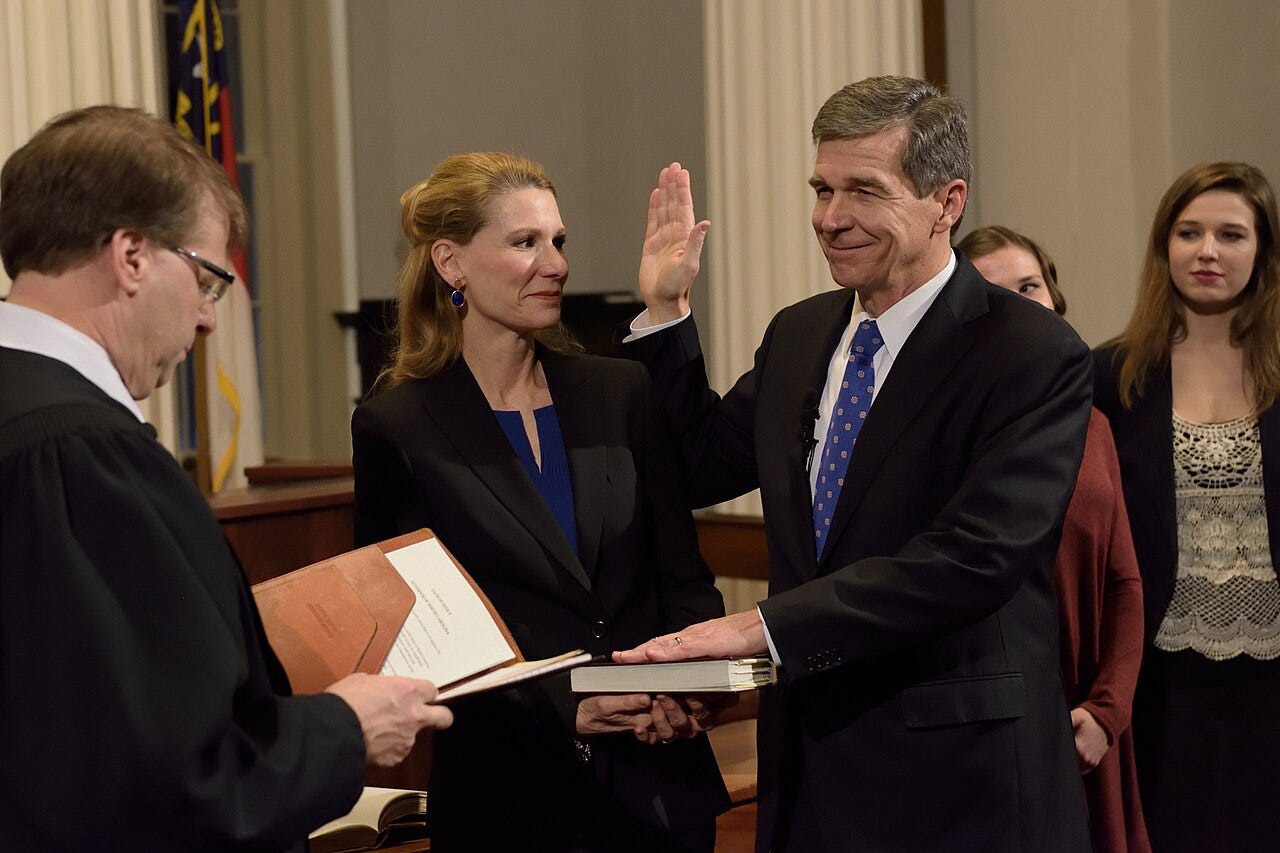
Former Governor Roy Cooper cast his ballot at the Wake County Board of Elections office in Raleigh on the first day of early voting. Cooper is the clear frontrunner in the Democratic primary and faces no significant opposition. Cooper served two terms as governor from 2017 to 2025 and won six statewide elections during his political career, including races for attorney general and governor. He has raised $14.2 million since entering the race in July 2025 and reported $9.1 million in cash on hand through January 31, 2026.
Former RNC Chairman Michael Whatley also voted on the first day of early voting. Whatley is leading the Republican primary field with 36 percent support according to recent polling, with Don Brown at 6 percent and Michele Morrow at 4 percent. Fifty percent of Republican primary voters remain undecided despite Whatley receiving President Trump‘s endorsement. Whatley faces a significant name recognition challenge, with 36 percent of North Carolina Republican primary voters reporting they are not familiar with him.
The Senate seat is open after Republican Senator Thom Tillis announced on June 29, 2025, that he would not seek re-election to a third term. Tillis retired after President Trump threatened to support a primary opponent when Tillis voted against the One Big Beautiful Bill Act, which included Medicaid cuts that Tillis said would harm North Carolina hospitals.
Both Cooper and Whatley are expected to win their party primaries on March 3, 2026. The general election matchup between the two is rated as a toss-up by nonpartisan election forecasters including Cook Political Report, Inside Elections, and Sabato’s Crystal Ball.
Recent polling shows Cooper leading Whatley in hypothetical general election matchups. A Carolina Journal poll conducted in November 2025 showed Cooper with 47 percent and Whatley with 39 percent. A Tipp Insights poll conducted in February 2026 showed Cooper with 48 percent and Whatley with 24 percent. The RealClearPolling average of multiple polls shows Cooper leading by 3.4 percentage points.
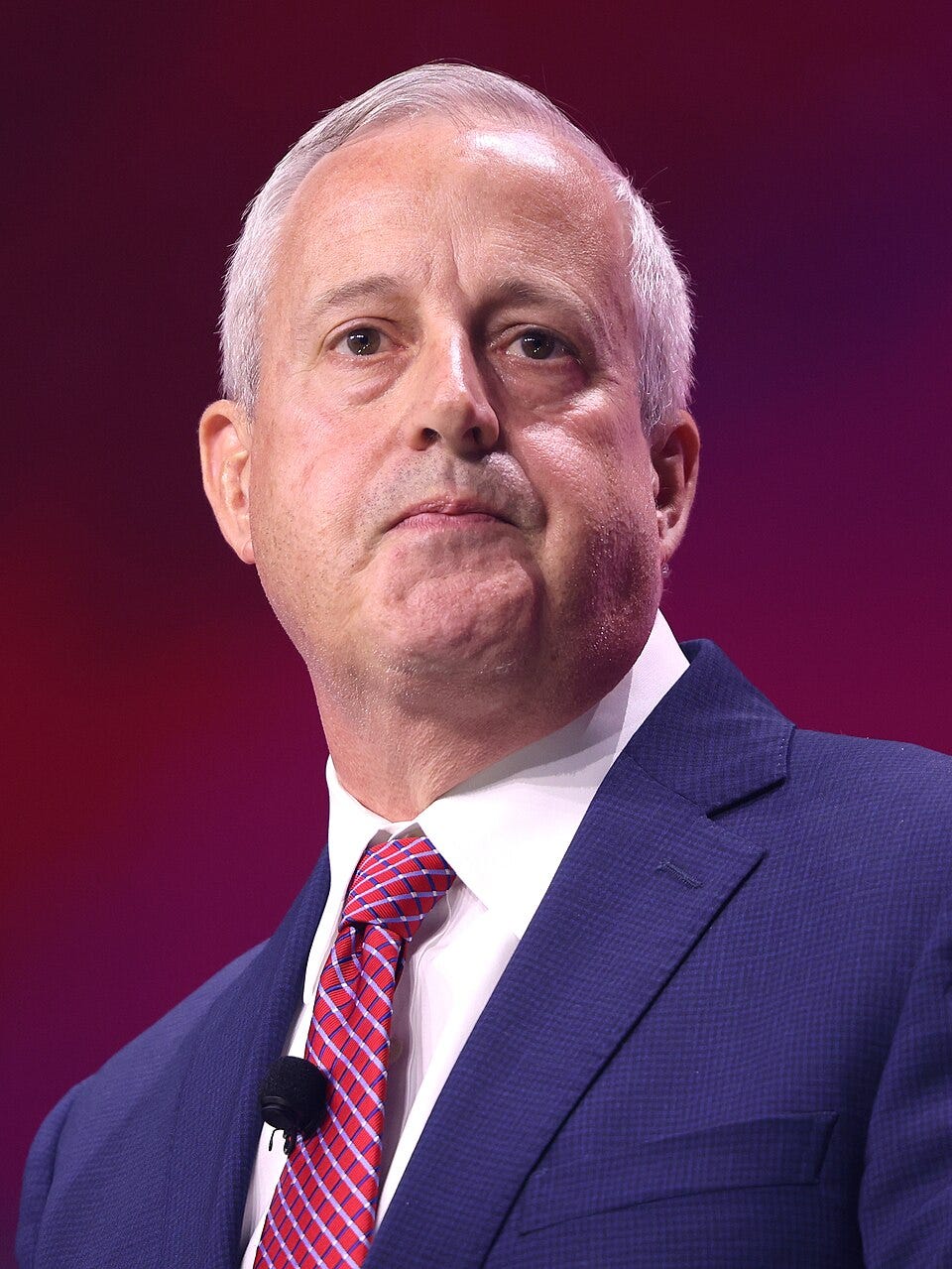
Whatley has raised $11.4 million through January 31, 2026, and reported $5.8 million in cash on hand. Outside groups including Super PACs have already committed more than $10 million in additional spending on the race. The Senate Leadership Fund, a Republican Super PAC aligned with Senate Republican leadership, has reserved advertising time in North Carolina for the general election. The Senate Majority PAC, a Democratic group, has done the same.
Cooper has focused his campaign on health care access, including defense of Medicaid expansion, and has positioned himself as a moderate Democrat who can work across party lines. He has emphasized his record as governor and his experience winning statewide elections in a competitive state. Whatley has emphasized his loyalty to President Trump‘s agenda and has focused on economic growth, law enforcement, and border security.
The race carries significant implications for Senate control. Republicans currently hold a 53-47 majority. If Democrats flip the North Carolina seat while holding their other seats, Republicans’ majority would narrow to 52-48. Combined with potential Democratic victories in other competitive races, the North Carolina outcome could determine which party controls the Senate in 2027.
North Carolina requires voters to present photo identification at polling places. Acceptable forms include a North Carolina driver’s license, North Carolina state ID, North Carolina voter photo ID (free), U.S. passport, U.S. military ID, or tribal enrollment card from a North Carolina-recognized tribe. Early voting runs through Saturday, February 28, 2026. Voters can verify registration and find polling locations at NCSBE.gov.
Campaign Spending and Advertising

The Texas and North Carolina Senate races have attracted record campaign spending in the primary phase of the election cycle. Combined spending across both states exceeds $90 million through January 31, 2026, with additional millions committed for the final two weeks before the March 3 primary.
In Texas, Republican primary candidates have spent more than $53 million combined. Cornyn, Paxton, and Hunt have invested heavily in television advertising in major media markets including Houston, Dallas-Fort Worth, and San Antonio. Paxton has committed $4 million to television advertising in the final two weeks before the primary. Cornyn has committed $6 million to television advertising in the same period. Hunt is spending less on television but has invested in targeted digital advertising aimed at younger voters and veterans.
Democratic primary candidates in Texas have spent more than $12 million combined. Crockett has committed $2 million to television advertising in the final two weeks. Talarico is spending less on paid media and is relying more heavily on grassroots organizing and earned media coverage.
In North Carolina, Cooper has reserved $1.5 million in television time for the final two weeks of the primary but may not spend all of it given his lack of serious primary opposition. Whatley is spending moderately on paid advertising to increase his name recognition before the primary. Outside groups have already committed more than $10 million in additional advertising spending on the general election race.
The next Federal Election Commission reporting deadline is April 15, 2026, covering campaign activity from January 1 through March 31, 2026. Those reports will provide a complete picture of spending during the primary election period.
What to Watch on Election Night
March 3, 2026, will provide the first results of the 2026 midterm election cycle. Several key questions will be answered in Texas and North Carolina.
In the Texas Republican primary, the central question is whether any candidate can avoid a runoff by receiving more than 50 percent of the vote. Current polling suggests a runoff between Paxton and Cornyn is virtually certain. The margin between the two candidates will indicate momentum heading into the May 26 runoff. The performance of Hunt, polling at approximately 15-17 percent, matters because his supporters will become decisive voters in a Paxton-Cornyn runoff. President Trump‘s endorsement, if he makes one before March 3, could significantly alter the outcome. If Trump has not endorsed by Election Day, the timing of his eventual endorsement becomes even more critical for the May 26 runoff.
In the Texas Democratic primary, the conflicting polls make the result difficult to predict. The University of Houston survey shows Crockett ahead by 8 points, while the Emerson poll shows Talarico ahead by 9 points. The margin of victory for either candidate will indicate Democratic enthusiasm and unity heading into the general election. Turnout in Dallas (where Crockett has her base) versus Austin and Round Rock (where Talarico has his base) will be an early indicator of which candidate’s organization performed better.
In North Carolina, both Cooper and Whatley are expected to win their primaries. The margins matter as indicators of strength heading into the general election. Cooper‘s margin will signal Democratic enthusiasm for the fall race. Whatley‘s margin, despite his name recognition challenges, will indicate how effectively he has consolidated Republican support behind Trump‘s endorsed candidate.
Early voting turnout in North Carolina, already tracking above 2024 levels in Wake County, will provide additional data points on voter enthusiasm in the 2026 cycle. North Carolina releases daily early voting statistics broken down by party registration, providing ongoing signals about which party has stronger turnout operations and enthusiasm heading toward March 3.
Conclusion
Fourteen days remain until the first votes of the 2026 midterm election cycle are cast. Early voting is already underway in North Carolina and begins today in Texas and Arkansas. The Texas Senate primaries feature competitive races in both parties, with Ken Paxton leading the Republican field according to two recent polls and a contested Democratic race between Jasmine Crockett and James Talarico that two conflicting surveys have been unable to definitively call.
Texas Republicans face a likely runoff between Paxton and John Cornyn on May 26, 2026, unless one candidate receives more than 50 percent on March 3. The race has drawn more than $53 million in campaign spending and has become the most expensive Republican Senate primary in Texas history. Texas Democrats will choose between Crockett and Talarico, with the winner facing long odds in the general election in a state that has not elected a Democrat to statewide office since 1994.
North Carolina voters have been casting early ballots since February 12, 2026, with Wake County reporting first-day turnout surpassing 2024 primary levels. Roy Cooper and Michael Whatley are expected to win their primaries on March 3 and face each other in a general election race rated as a toss-up that could determine which party controls the Senate in 2027.
Voters can verify their registration status, review identification requirements, find polling locations, and check early voting schedules at their state election websites. Early voting in North Carolina runs through Saturday, February 28, 2026. Early voting in Texas and Arkansas runs through Friday, February 28, 2026.
Election Day in all three states is Tuesday, March 3, 2026.