Trump Claims $18 Trillion in Foreign Investment Pledges: Breakdown
by Scott Burton Official for TrumpTrain.net (6 min read)

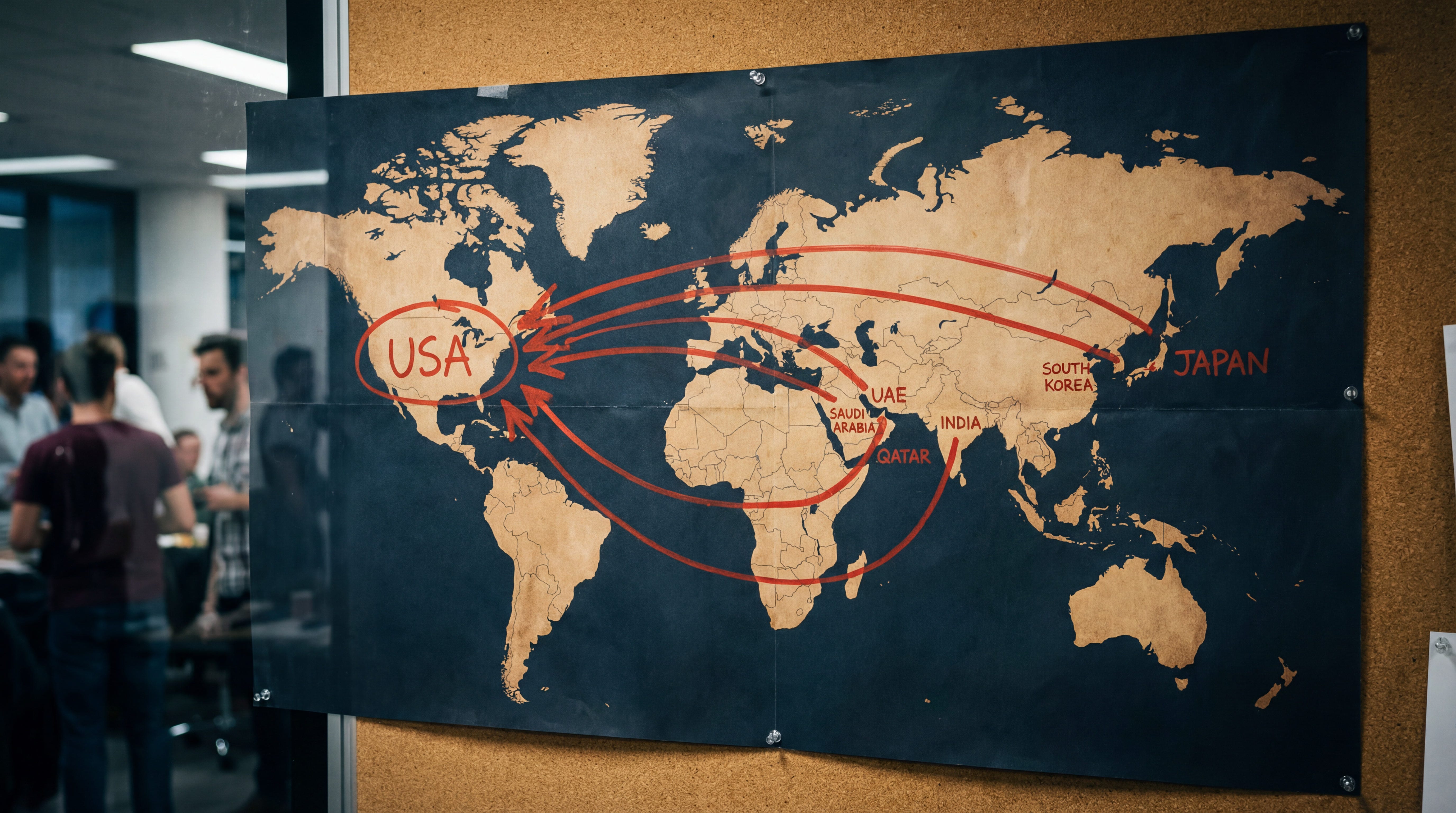
WASHINGTON President Donald Trump on Monday claimed his administration had secured more than $18 trillion in foreign investment pledges since taking office in January, calling it a figure “never seen in history” and crediting his tariff policies and tax reforms for the surge.
Trump made the remark during the final Cabinet meeting of 2025, held in the White House Cabinet Room. “In 10 months, we’ve secured commitments of over $18 trillion,”—he said—“There’s never been a country that’s had that kind of an investment ever in history.”
Commerce Secretary Howard Lutnick, speaking at the same meeting, tied the investments to “asymmetric trade deals” that impose 15 percent tariffs on European and British exports while lowering U.S. rates. He cited $750 billion from Japan and South Korea in manufacturing and nuclear projects as examples.
Treasury Secretary Scott Bessent said the inflows have driven a 15 percent increase in capital expenditures, or CapEx, and positioned the U.S. for “low-inflation growth” in 2026.
The White House Tracker
The White House has tracked these pledges on a running online list titled “Trump Effect: A Running List of New U.S. Investment in President Trump’s Second Term,” last updated Nov. 25. As of that date, it tallies $9.6 trillion in “total U.S. and foreign investments” announced since January. The site attributes the pledges to tariffs, deregulation and bilateral deals.
Trump’s $18 trillion figure, repeated in speeches since October, builds on that list. In a Nov. 17 White House speech, he said the volume of investments “could exceed $20-21 trillion” by the end of 2025. He added that over $17 trillion had been invested in the last nine months alone, reaching “almost $18 trillion.”
The pledges span semiconductors, energy, pharmaceuticals and infrastructure, with heavy emphasis on Asia and the Middle East. Below is a breakdown of the major commitments, based on White House announcements and Trump’s statements.
The White House List: A Breakdown
The administration’s online tracker categorizes pledges into domestic corporate announcements and foreign government commitments. As of late November, it lists about $2 trillion from U.S. companies and $7.6 trillion from abroad, totaling $9.6 trillion. Trump has described these as the foundation for his larger $18 trillion total, including additional deals in negotiation.
Japan: $1 Trillion
The largest single pledge comes from Japan, announced during Trump’s May 2025 visit to Tokyo. Prime Minister Shigeru Ishiba committed to $1 trillion over five years in U.S. manufacturing, semiconductors and critical minerals.
Trump highlighted the deal in October, saying it advanced Japan’s previous $550 billion commitment to “further revitalize the U.S. industrial base.” A White House fact sheet from Oct. 28 detailed major projects, including a memorandum of cooperation to expand shipbuilding capacity and historic purchases of U.S. exports.
Japanese firms like Toyota and Sony detailed portions: Toyota pledged $88 billion for hybrid vehicle plants in West Virginia and Kentucky, while TSMC expanded its Arizona chip fab with $65 billion. The White House credits the full $1 trillion to “revitalizing the U.S. industrial base.”
Saudi Arabia: $1 Trillion (Up from $600 Billion)
During Trump’s November 2025 Middle East trip, Crown Prince Mohammed bin Salman raised a prior $600 billion pledge to $1 trillion, focusing on energy, defense and AI infrastructure.
Trump hailed the increase at a Nov. 18 White House event, linking it to tariff exemptions on Saudi oil imports. Saudi Aramco detailed $200 billion for Texas refineries and data centers. The White House framed it as a “strategic partnership,” including purchases of U.S. weapons and F-35 jets.
United Arab Emirates: $1.4 Trillion
The UAE committed $1.4 trillion in August, the largest foreign pledge, for AI, renewables and real estate. Abu Dhabi’s sovereign wealth fund, Mubadala, leads with $300 billion in semiconductors and $400 billion in green energy projects across California and Texas.
Trump announced the deal after July tariff threats on Gulf imports. UAE President Sheikh Mohamed bin Zayed Al Nahyan described it as a “10-year framework for mutual growth.”
South Korea: $450 Billion
South Korea pledged $450 billion in June, primarily for energy and autos, after Trump imposed 15 percent tariffs on electronics. Hyundai committed $200 billion to U.S. battery plants in Georgia, while Samsung added $100 billion for chip fabs in Texas.
Lutnick cited the $450 billion during Monday’s Cabinet meeting as part of the $750 billion combined with Japan. Bessent confirmed the full amount in December.
India: $500 Billion
Listed as $500 billion in “mutual trade expansion,” India’s pledge from March emphasizes pharmaceuticals and IT. Tata Group announced $150 billion for semiconductor plants in Ohio, and Reliance Industries $100 billion for renewables.
Trump called it a “strategic partnership” during a March joint statement with Prime Minister Narendra Modi.
Qatar: $1.2 Trillion
Qatar’s November commitment covers energy and infrastructure, building on $18 billion from 2019. QatarEnergy pledged $400 billion for LNG terminals in Louisiana.
Trump described it as “historic,” tied to tariff relief on Qatari imports.
Domestic Tech Giants: $1.5 Trillion Combined
U.S. firms contribute significantly. NVIDIA pledged $500 billion for AI infrastructure. Apple committed $500 billion to manufacturing and training. Amazon and Microsoft added $250 billion each for data centers.
Trump hosted NVIDIA CEO Jensen Huang at a White House event in April, announcing plans to manufacture AI superchips in the U.S. as part of the $500 billion investment.
Other Key Pledges
- European Union: $600 Billion – Vague estimate of potential private investment through 2028, announced in an August joint statement.
- Taiwan: $100 Billion – Boost to U.S.-based investment in chips.
- Bahrain: $17 Billion – In U.S. infrastructure.
- Micron Technology: $200 Billion – In advanced memory chips, including a second fab in Idaho.
- Johnson & Johnson: $55 Billion – In manufacturing, R&D and technology over four years.
- Roche: $50 Billion – In U.S.-based manufacturing and R&D, creating over 1,000 jobs.
Smaller pledges fill the rest, including from Siemens, Amgen and other firms credited to Trump’s policies.
How the Pledges Were Secured
Trump’s strategy blends tariffs, tax incentives and bilateral pressure. Executive Order 14157 in January created the “United States Investment Accelerator” to fast-track permits and cut regulations. It has processed 150 projects, saving $40 billion in compliance costs, per the Office of Management and Budget.
Tariffs—25 percent on China, 15 percent on EU and allies—prompted concessions. South Korea’s pledge followed a June tariff hike; Japan’s came after auto threats.
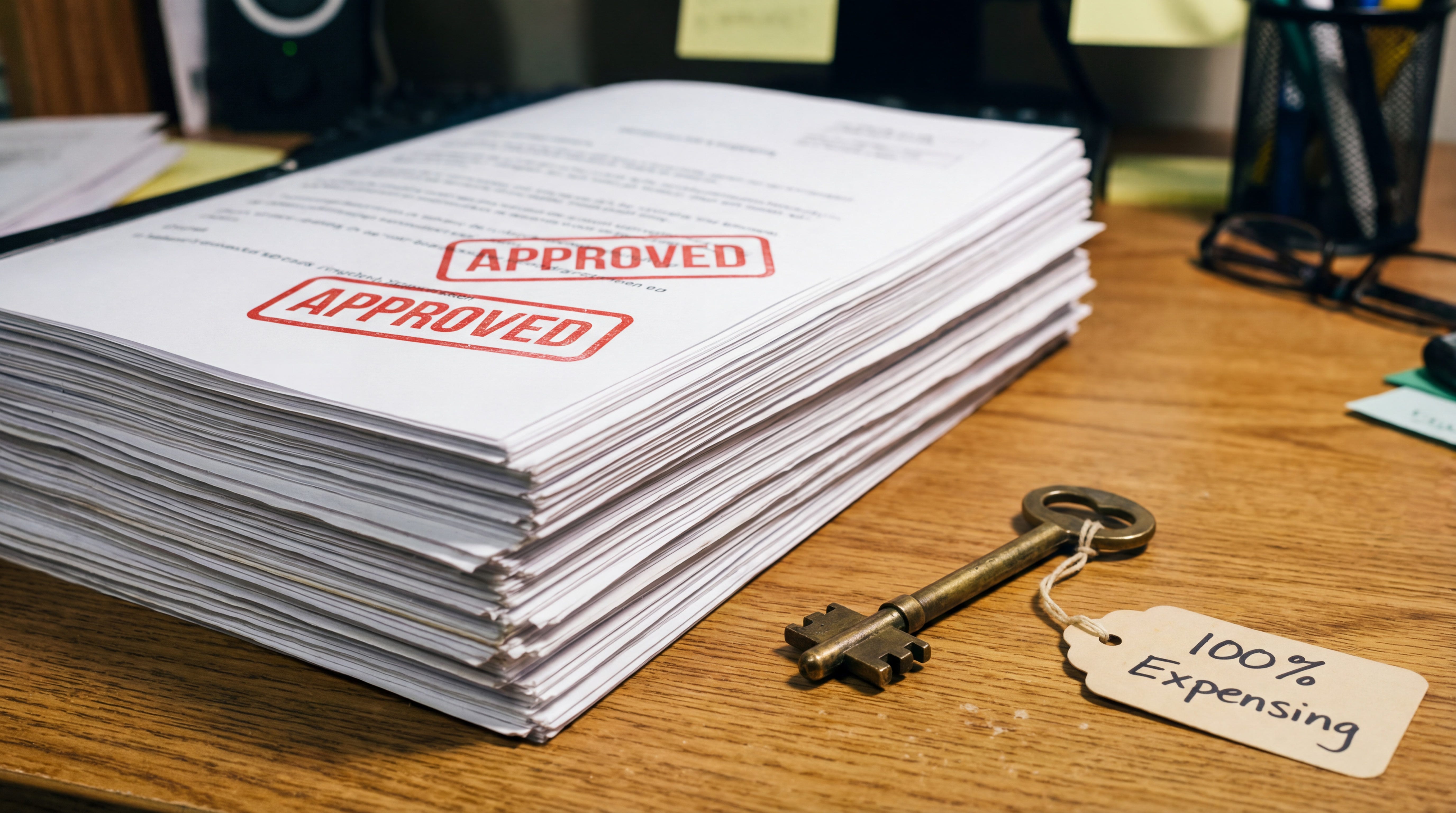
The “One Big Beautiful Bill,” pending in Congress, offers 100 percent expensing and no taxes on tips, luring firms like NVIDIA. Trump said in November it would enable “trillions more to come.”
In a 100 Days of Investment fact sheet from April 29, the White House reported over $5 trillion secured in the first three months, creating more than 451,000 jobs. By August, the running list had grown to trillions in manufacturing, production and innovation.
Economic Impact So Far
Bureau of Economic Analysis data show business investment rose 22 percent in the first quarter of 2025, the largest quarterly jump since 1980. CapEx hit 15 percent growth, per Bessent’s remarks Monday.
Job creation: 451,000 new positions announced, mostly in manufacturing. Semiconductors lead, with 100,000 roles from TSMC and Intel expansions.
Trump tied the surge to lower inflation in his Cabinet remarks, saying the investments would bring “prices down, way down.” He contrasted it with the previous administration, claiming, “We inherited the worst inflation in the history of our country.”
What’s Next?
Trump projects $21 trillion by year-end, per a November rally. Lutnick said December deals with China and Brazil could add $2 trillion.
In his Nov. 17 speech, Trump said, “This is trillions of dollars we’re talking about in terms of the tariff income and all the investment income that’s come into our country”—Trump said—”We have more than — I would say, right now, more than $18 trillion.”
The administration expects the “One Big Beautiful Bill” to lock in incentives. As Trump said Monday, “We’re bringing the prices down... and the investments in.”
Independent analyses question the feasibility of some pledges, citing multi-year timelines and GDP comparisons.