U.S. Boat Strikes on Venezuelan Narco-Traffickers: Legal Authority Under Fire in 2025 Escalation
by Scott Burton Official for TrumpTrain.net

WASHINGTON The U.S. military’s lethal strikes on suspected drug-running boats off Venezuela’s coast, which began in September 2025 and have since claimed at least 83 lives across 21 operations, have thrust the Trump administration’s counter-narcotics strategy into a legal maelstrom.
What started as a targeted campaign against “narco-terrorists” has sparked bipartisan congressional scrutiny, international condemnation and allegations of war crimes, even as administration officials insist the actions are squarely within presidential powers.
The First Strike: September 2, 2025
On Sept. 2, 2025, the U.S. Navy launched its first publicly acknowledged strike, destroying a go-fast vessel in international waters of the southern Caribbean.
President Donald Trump announced the operation on Truth Social that day, posting grainy black-and-white video of the explosion and claiming it killed 11 members of the Venezuelan gang Tren de Aragua, a group his administration had designated a foreign terrorist organization just months earlier.
“These terrorists were transporting illegal narcotics heading to the United States,” Trump wrote. “The strike resulted in 11 terrorists killed in action.”
The incident, part of a broader Operation Southern Spear, marked a dramatic escalation in U.S. efforts to stem the flow of fentanyl and other synthetic opioids killing over 100,000 Americans annually, according to Centers for Disease Control and Prevention data.
By December, the strikes had expanded to the eastern Pacific, with Defense Secretary Pete Hegseth vowing on X to “find and terminate EVERY vessel with the intention of trafficking drugs to America.”
Yet as the death toll mounted, questions swirled: Were these lawful acts of self-defense against terrorists, or extrajudicial killings disguised as counterterrorism?
Administration’s Legal Justification
Administration lawyers argue the strikes are authorized under a robust framework blending constitutional powers, post-9/11 statutes and recent executive actions treating drug cartels as terrorist entities.
“President Trump and Secretary Hegseth have made it clear that presidentially designated narco-terrorist groups are subject to lethal targeting in accordance with the laws of war,” White House press secretary Karoline Leavitt said during a Dec. 2 briefing.
Timeline of the Sept. 2 Controversy
The initial operation unfolded amid heightened U.S. naval deployments in the Caribbean, including 14 warships, drones and surveillance aircraft stationed from Puerto Rico to the U.S. Virgin Islands.
U.S. Southern Command had ramped up patrols in mid-August, citing intelligence on a surge in Venezuelan maritime trafficking.
At approximately 3:45 p.m. local time on Sept. 1 (or early Sept. 2 U.S. time), a U.S. surveillance drone spotted a 40-foot open-hulled vessel zigzagging at high speed 120 nautical miles northeast of Caracas.
The boat matched profiles of “go-fast” smugglers: multiple outboard engines, low profile for evasion and white containers consistent with drug bales. Intelligence linked it to Tren de Aragua, which the State Department described as conducting “irregular warfare” against U.S. interests through fentanyl distribution.
Adm. Frank “Mitch” Bradley, then leading Joint Special Operations Command, authorized the first missile strike from a guided-missile destroyer. The explosion sank the vessel, killing all 11 aboard, per initial Pentagon assessments.
Trump released the video hours later, hailing it as a blow to “cartel terrorists under the control of Nicolás Maduro.”
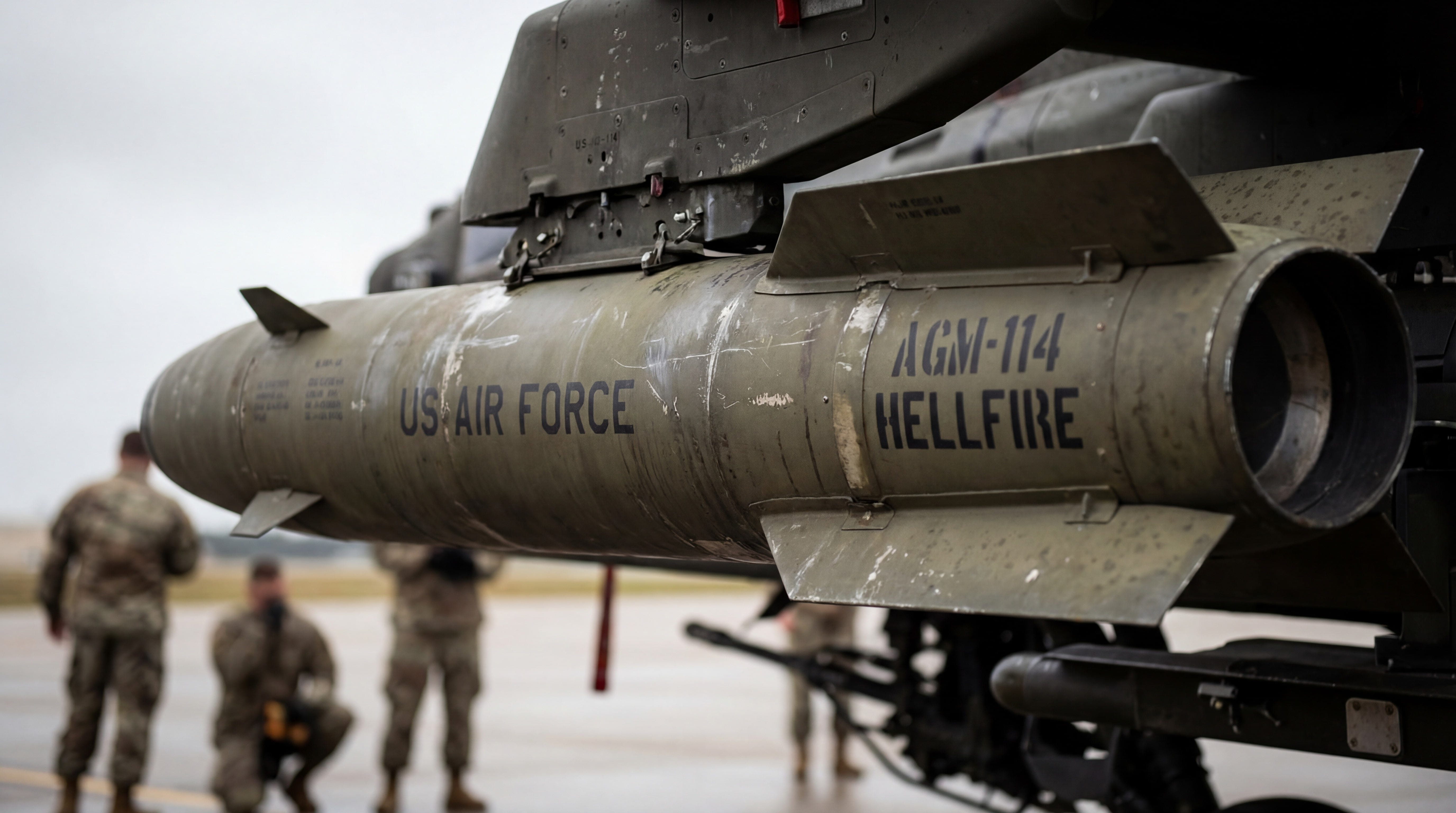
But reports soon emerged of a second strike. Over an hour later, as smoke cleared and potential survivors surfaced, Bradley ordered a follow-up Hellfire missile, citing “fog of war” protocols to eliminate the threat.
Leavitt confirmed this on Dec. 2, saying Bradley “worked well within his authority... to ensure the boat was destroyed and the threat of narco-terrorists to the United States was completely eliminated.”
Venezuelan officials decried the attacks as “aggression” within their exclusive economic zone, though U.S. data placed the site in international waters under the United Nations Convention on the Law of the Sea.
Families of the dead, speaking to outlets like El Pitazo and El Nacional, claimed many were fishermen, not traffickers. The Venezuelan government suppressed names, but human rights groups identified at least five civilians among the casualties.
By late November, the campaign had sunk 21 vessels, killing 83 people—mostly Venezuelan and Colombian nationals—with one reported survivor from an October Pacific strike.
Hegseth, speaking on Fox News, called it “the declared intent... to stop lethal drugs, destroy narco-boats, and kill the narco-terrorists who are poisoning the American people.”
Cartel Terrorist Designations in 2025
The legal linchpin for these operations traces to Trump’s first day in office. On Jan. 20, 2025, he signed Executive Order 14157, “Designating Cartels and Other Organizations as Foreign Terrorist Organizations and Specially Designated Global Terrorists.”
The order invoked the International Emergency Economic Powers Act (50 U.S.C. § 1701 et seq.) and directed the State Department to label transnational criminal groups as terrorists if they threatened U.S. security through drug trafficking.
On Feb. 20, 2025, Secretary of State Marco Rubio announced the first wave: eight Latin American entities as both FTOs under Section 219 of the Immigration and Nationality Act (8 U.S.C. § 1189) and SDGTs under Executive Order 13224.
The list included Tren de Aragua, MS-13, Sinaloa Cartel, Jalisco New Generation Cartel, Northeast Cartel, La Nueva Familia Michoacana, Gulf Cartel and United Cartels. Rubio cited their “campaigns of violence and terror” via fentanyl, which the order framed as an “armed attack” on Americans.
Later designations added Cartel de los Soles (Nov. 24), Barrio 18 (Sept. 24) and Ecuadorian groups Los Choneros and Los Lobos (Sept. 5). By December, FTOs skewed heavily toward narco-groups, outnumbering traditional Islamist ones.

Congressional and International Criticism
Critics contend the framework stretches too far. Democratic lawmakers, led by Sen. Jack Reed (D-R.I.), argue FTO designations do not equate to AUMF authorization, which targets 9/11 perpetrators, not drug criminals.
“Designating cartels as terrorists does not magically grant military force powers,” Reed said in a November hearing. A bipartisan Senate resolution to bar Caribbean strikes without approval failed twice, but the House passed a similar measure in October.
Legal experts like Brian Finucane of the International Crisis Group, a former State Department attorney, say the “armed conflict” claim misapplies international humanitarian law to law enforcement scenarios.
“The Coast Guard has primary maritime authority for interdictions, with rules emphasizing warnings and arrests, not lethal force,” Finucane said. Retired Navy JAG Mark Nevitt echoed this, noting strikes bypass “strict rules” for disabling shots.
Human Rights Watch and Amnesty International labeled the second Sept. 2 strike a potential war crime, violating Geneva Conventions Protocol I (Art. 41) against targeting incapacitated persons.
A group of former JAGs issued an opinion in November: “There is no legal basis for strikes on boats carrying narcotics; this is extrajudicial killing.”
The United Nations High Commissioner for Human Rights called for an investigation in October, citing 83 civilian deaths. Venezuelan President Nicolás Maduro accused Trump of “state terrorism,” linking strikes to a $50 million bounty on his arrest for alleged cartel ties—claims U.S. intelligence has not substantiated.
Even Republicans like Sen. Roger Wicker (R-Miss.) expressed unease, joining Reed in a statement on “follow-on strikes” reports. Failed resolutions highlight GOP divisions.
Results and Outlook
By July 2025, fentanyl seizures dropped 56 percent at the southern border, per DHS data, which Noem attributed to the campaign during the Dec. 2 meeting. Hegseth claimed a 91 percent reduction in sea-based inflows.
Yet efficacy is debated. The State Department’s 2025 International Narcotics Control Strategy Report pins most U.S. fentanyl on Mexico, not Venezuela. Strikes have paused since late November—”hard to find boats right now,” Hegseth quipped—amid winter weather and Venezuelan naval patrols.
As 2025 ends, the strikes underscore a tension in U.S. law: expansive executive powers post-9/11 versus congressional war-making under Article I. With no new AUMF forthcoming and litigation looming, the campaign’s future hinges on 2026 midterms.
For now, Leavitt’s refrain holds: “If narcoterrorists are trafficking illegal drugs towards the United States, he has the authority to kill them.”