
Cabinet Members’ Remarks: Complete Recap of the December 2, 2025, Meeting
By Scott Burton Official for TrumpTrain.net (6 min read)

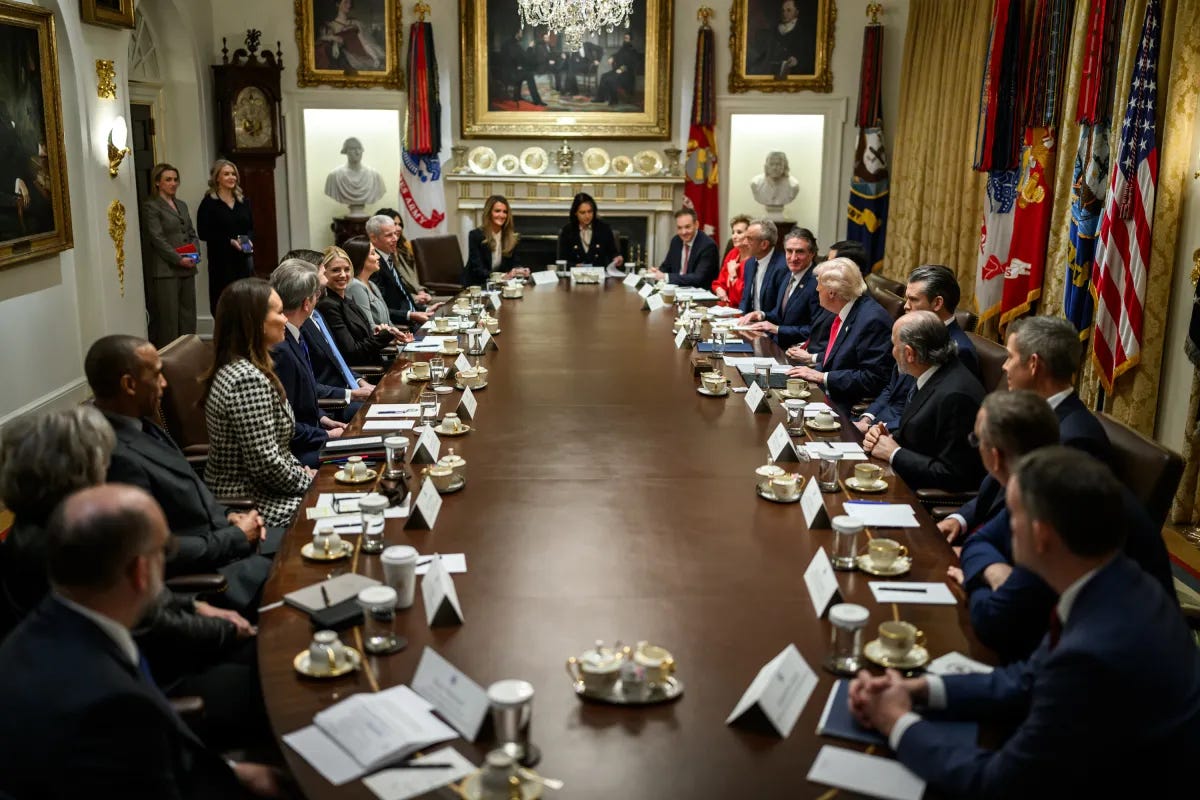
WASHINGTON – In the ninth and final Cabinet meeting of 2025, held December 2 in the White House Cabinet Room, 20 Cabinet secretaries and Vice President JD Vance delivered brief updates on their departments’ achievements and priorities since President Donald Trump’s inauguration on January 20.
The 2-hour, 18-minute session followed the standard Trump-era format: Trump’s opening remarks, sequential reports from each official, and a question-and-answer period with reporters. All speakers focused on policy wins, operational changes, and future plans, with Trump interjecting occasionally.
The meeting, open to the press, began at 11:58 a.m. EST and ended at 2:17 p.m. Below is a verbatim recap of each speaker’s remarks, in order of appearance, based on the official White House transcript and video feed.
Pete Hegseth, Secretary of War
Secretary of War Pete Hegseth, whose nameplate read “SSecretary of War” due to a printing error, opened the round of updates with a report on military readiness and counter-narcotics operations.
He credited the administration’s removal of diversity, equity, and inclusion (DEI) programs and political correctness mandates with driving record-high recruitment and retention rates across all branches. “Merit-based operations are back,” Hegseth said, emphasizing investments in advanced capabilities such as the Golden Dome missile defense system and the F-47 fighter jet program.
He highlighted a 91% reduction in sea-based drug entries into the United States, attributing it to ongoing lethal strikes against narco-terrorist vessels. Hegseth detailed the administration’s designation of Latin American cartels as foreign terrorist organizations, enabling military authority to treat their boats as terrorist targets.
Looking ahead, he vowed continued operations to “defeat regional terrorist groups” and maintain the momentum against fentanyl trafficking. Trump interjected, “Every boat we take out saves 25,000 American lives,”—referring to estimated lives preserved by interdicting drug flows.

Howard Lutnick, Secretary of Commerce
Commerce Secretary Howard Lutnick followed with an overview of trade realignments and investment inflows.
He described a series of “asymmetric trade deals” that reversed perceived U.S. disadvantages, including agreements with the United Kingdom and European Union imposing 15% tariffs on their exports while reducing U.S. rates. Lutnick cited $750 billion in commitments from Japan and South Korea for U.S. manufacturing and nuclear energy projects as direct results.
He noted boosts in American auto stocks, such as General Motors rising 40%, and an expansion of semiconductor investments from $300 billion to $750 billion. “Reshoring is happening at scale,” Lutnick said, pointing to future expansions in pharmaceuticals ($250 billion) and Intel facilities ($40 billion).
He attributed the surge to tariff leverage and deregulation, forecasting dozens more deals to bring supply chains home.
Sean Duffy, Secretary of Transportation
Transportation Secretary Sean Duffy reported progress on infrastructure modernization and safety reforms.
He announced the Federal Aviation Administration (FAA) had completed one-third of the transition from copper to fiber-optic systems for air traffic control, installing new American-made radars and radios. Duffy requested $20 billion from Congress to finish the upgrades by the end of Trump’s term.
He detailed the revocation of unsafe commercial driver’s licenses (CDLs) issued by sham schools, particularly in California and Minnesota, and updates on Union Station cleanup and the Penn Station rebuild in New York. Duffy promoted a new air travel civility campaign to reduce disruptions and celebrated the U.S. Merchant Marine Academy’s football victory as a morale boost for the department.
“Safe, efficient travel is our mission,” he said, emphasizing American manufacturing in aviation tech.
Doug Collins, Secretary of Veterans Affairs
Veterans Affairs Secretary Doug Collins highlighted administrative efficiencies and veteran-focused reforms.
He reported a reduction of 160,000 cases in the VA claims backlog, returning it to pre-COVID levels, alongside the restoration of the CHAMPVA program for dependents. Collins credited gains in claims processing and credentialing with saving $3 billion in operational costs.
He announced a reorganization of VA hospitals and new community care contracts to expand access. Despite 30,000 retirements in the workforce, Collins noted higher approval ratings and a “motivated team prioritizing veterans first.”
Future plans include further streamlining to eliminate wait times entirely.
Jamieson Greer, U.S. Trade Representative
U.S. Trade Representative Jamieson Greer provided a high-level assessment of global trade shifts.
He described efforts to “flip global trade to protect U.S. industries” through targeted tariffs while reducing foreign barriers, resulting in reciprocal agreements “embraced worldwide.” Greer emphasized balanced, fair trade under the Trump administration, contrasting it with prior imbalances.
He anticipated “major changes ahead,” including deeper bilateral pacts to safeguard American workers and exporters.
Unidentified Regulatory Policy Lead
An unidentified regulatory policy lead detailed the administration’s deregulatory achievements.
The official reported a 48-to-1 ratio of rules removed to new ones added, exceeding initial goals. This included a 25% cut to federal acquisition regulations—500 pages and 2,700 mandates—yielding $40 billion in immediate savings and $200–400 billion over 10 years.
The lead credited the effort with accelerating procurement and opening opportunities for small businesses. Plans include finalizing additional rules for faster federal contracting processes.

Scott Turner, Secretary of Housing and Urban Development
Housing and Urban Development Secretary Scott Turner focused on public housing security and homeownership initiatives.
He announced task forces targeting crime, trafficking, and unauthorized occupants in public housing, including operations in Memphis and Washington, D.C., with a new crime hotline. Turner emphasized ensuring “only Americans reside” in HUD properties.
He reported support for more than 1 million new homeownerships, including 560,000 first-time buyers. Relocating HUD headquarters to Virginia saved $500 million, with additional funds directed to foster youth financial literacy programs.
Brooke Rollins, Secretary of Agriculture
Agriculture Secretary Brooke Rollins outlined reforms to farm programs and affordability measures.
She announced the end of DEI and climate-focused initiatives, reductions in input costs through trade deals, and the movement of 800,000 people off the Supplemental Nutrition Assistance Program (SNAP). Rollins highlighted victories in legal battles for ranchers and resolution of property disputes.
The department withheld SNAP funds from non-compliant states on work requirements. Future plans include dozens of trade deals, rural prosperity initiatives, and bridge payments for farmers recovering from previous years’ losses.
Scott Bessent, Secretary of the Treasury
Treasury Secretary Scott Bessent reported on economic inflows and fiscal reforms.
He noted trillions in investments driving a 15% boom in capital expenditures (CapEx). The pending “One Big Beautiful Bill” would enable 100% expensing for businesses, eliminate taxes on tips, overtime, and Social Security benefits, and allow retroactive car loan deductions for 2026 tax refunds.
Bessent described the bond market’s best year since 2020 as signaling low-inflation growth ahead. He credited fixes to immigration, interest rates, and inflation for setting up a strong 2026 economy.
JD Vance, Vice President
Vice President JD Vance summarized household economic gains.
He reported a $1,000-plus increase in average household income over 10 months, reversing a $3,000 loss under the previous administration. Vance blamed Democratic policies on immigration, taxes, and green spending for prior affordability issues.
He noted progress on housing costs, tax relief, and food prices, forecasting 2026 as a year of “unprecedented growth.”
Pam Bondi, Attorney General
Attorney General Pam Bondi updated on public safety and legal actions.
She reported 7,000-plus arrests in Washington, D.C., and 3,500 in Memphis through multi-agency efforts. The department seized 45 million fentanyl pills—equivalent to 347 million lethal doses—and 31,000 illegal guns.
Bondi noted 575 lawsuits with a 92% win rate at the Supreme Court, including immigration injunctions and the end of DEI programs. Plans include greater accountability and dropping Biden-era cases.
Lori Chavez-DeRemer, Secretary of Labor
Labor Secretary Lori Chavez-DeRemer highlighted job creation and training.
She announced 2 million native-born jobs added, 250,000 new apprenticeships, and 2,000 programs funded with $86 million for AI infrastructure, including an upcoming AI workforce hub.
The department rescinded DEI initiatives, saving $1 billion, and launched 200 probes into foreign labor abuse via Project Firewall. Chavez-DeRemer noted new rules allowing cryptocurrency in retirement plans and a focus on skilling for manufacturing and trades.
Chris Wright, Secretary of Energy
Energy Secretary Chris Wright reported on fuel price reductions.
He said gasoline prices had fallen below $3 nationally, as low as $1.99 in the heartland, due to administration policies. Electricity costs declined by reversing plant closures and adding gigawatts of capacity, adopting red-state models that achieved 35% demand growth with falling prices.
Wright contrasted blue states’ rising costs from unreliable energy sources and predicted nationwide declines under Trump.
Kristi Noem, Secretary of Homeland Security
Homeland Security Secretary Kristi Noem detailed enforcement and disaster response.
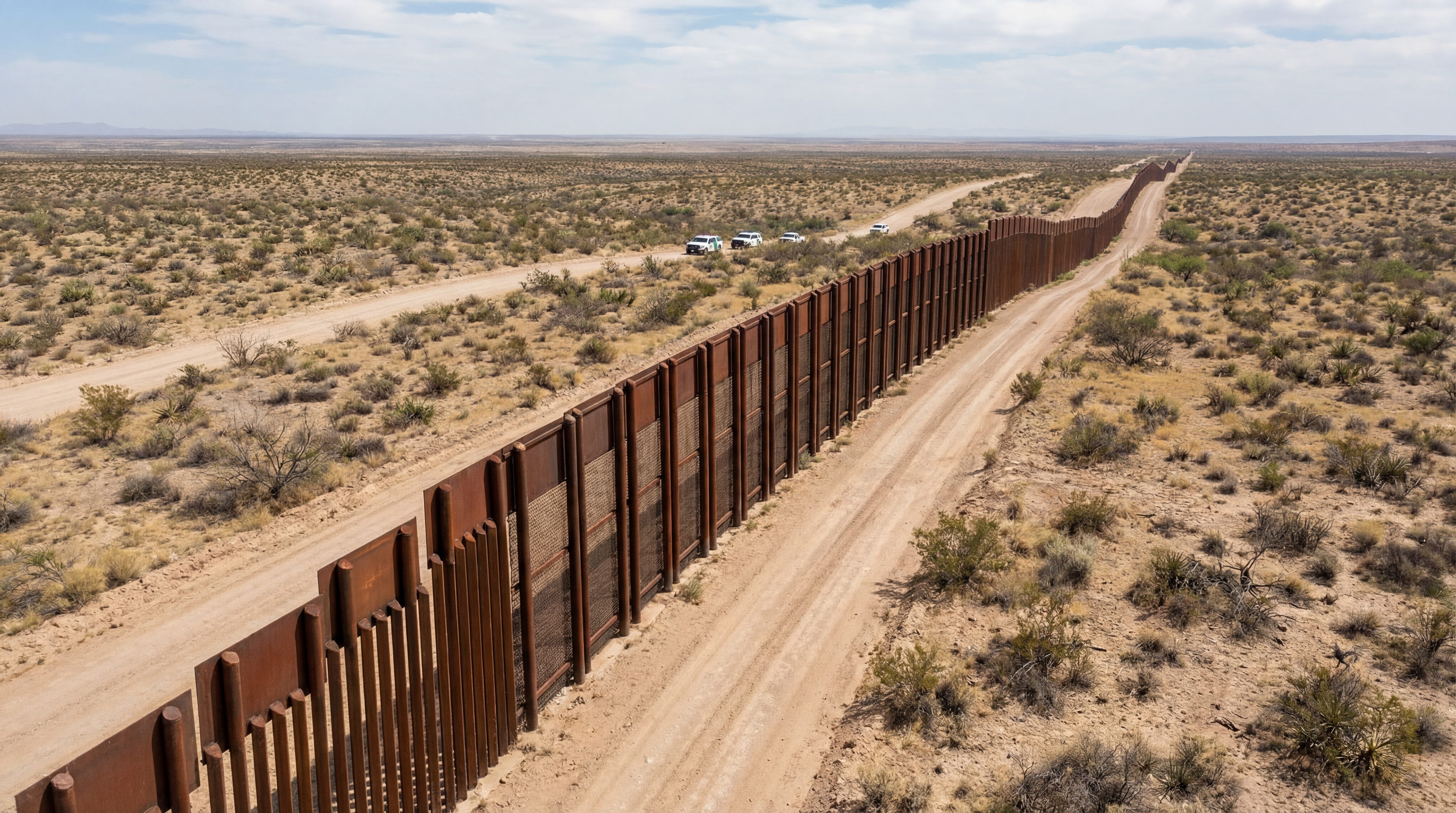
She announced the removal of 2 million illegal immigrants, prioritizing terrorists and criminals, with the hiring of the 10,000th ICE officer. Noem reported a 50% reduction in fraudulent Minnesota visas and a 56% drop in southern border fentanyl seizures.
FEMA operations improved 150% in speed. The Transportation Security Administration (TSA) handled a government shutdown seamlessly, with no hurricane impacts. Plans include more removals during the holidays.
Kelly Loeffler, Small Business Administration Administrator
Small Business Administration Administrator Kelly Loeffler praised economic momentum.
She reported record small-business optimism and an MOU with Labor for skilled labor pipelines. The SBA facilitated $100 billion in lending and investments.
Loeffler noted $100 billion in deregulation savings and thanked workers for embracing fair trade and low inflation. She mentioned a voluntary Cabinet Bible study group.
Lee Zeldin, Environmental Protection Agency Administrator
EPA Administrator Lee Zeldin highlighted environmental and economic reforms.
He reported record cleanup of Los Angeles wildfires and an end to the Mexico border sewage crisis. The agency achieved the largest deregulatory effort in history, rescinding the 2009 endangerment finding and EV mandates, redefining U.S. waters, and cutting the workforce while saving $30 billion by canceling grants.
Zeldin prioritized “economy and people over bureaucracy.”
Linda McMahon, Secretary of Education
Education Secretary Linda McMahon urged decentralizing authority amid proficiency gaps, such as only 30% of eighth-graders reading at grade level.
She criticized federal bureaucracy and announced MOUs with Labor, HHS, and State for transferring programs like WIOA and Perkins. The department removed anti-Semitism and DEI initiatives, reintroduced the science of reading, and halved the workforce for efficiency.
Robert F. Kennedy Jr., Secretary of Health and Human Services
Health and Human Services Secretary Robert F. Kennedy Jr. announced health access reforms.
He ended the “war on women” by removing hormone replacement therapy black box warnings. Most-favored-nation drug pricing secured the lowest U.S. prices through pharma deals and a UK agreement.
The department eliminated prior authorizations for 280 million Americans by January 2026 and enabled health record sharing, increasing access 100-fold. Kennedy revoked a nursing home staffing rule, saving $25 billion.
Doug Burgum, Secretary of the Interior
Interior Secretary Doug Burgum reported on energy and conservation.
He announced record oil and natural gas production, with energy exports to allies. A $100 nonresident park fee surcharge funded preservation, alongside 10 free entry days.
Burgum positioned the department for economic abundance with lower taxes, regulations, and jobs ahead of the nation’s 250th anniversary, praising the team for a vision of peace and prosperity.
Marco Rubio, Secretary of State
Secretary of State Marco Rubio closed the updates with foreign policy highlights.
He described a transformational “America First” approach to migration, trade, aid, and NATO (requiring 5% defense spending pledges). Rubio credited Trump with advancing peace in Gaza through intervention, forming a global border coalition, and working to end wars in Ukraine and Sudan.
He emphasized Trump’s deal-making for enhanced U.S. safety, strength, and prosperity.
The session concluded with Trump’s extended Q&A, applause, and departure. No further updates were provided beyond the remarks. All statements are drawn from the official transcript and video.
More from Issue #1: The Cabinet
- Cabinet Members’ Remarks Recap
- Trump’s $18 Trillion Investment Pledges
Subscribe (free) for new articles every Tuesday and Friday.